The Many Faces of Mr. Fluffington: What's Really Behind Your Cat's Daily Personality Rollercoaster

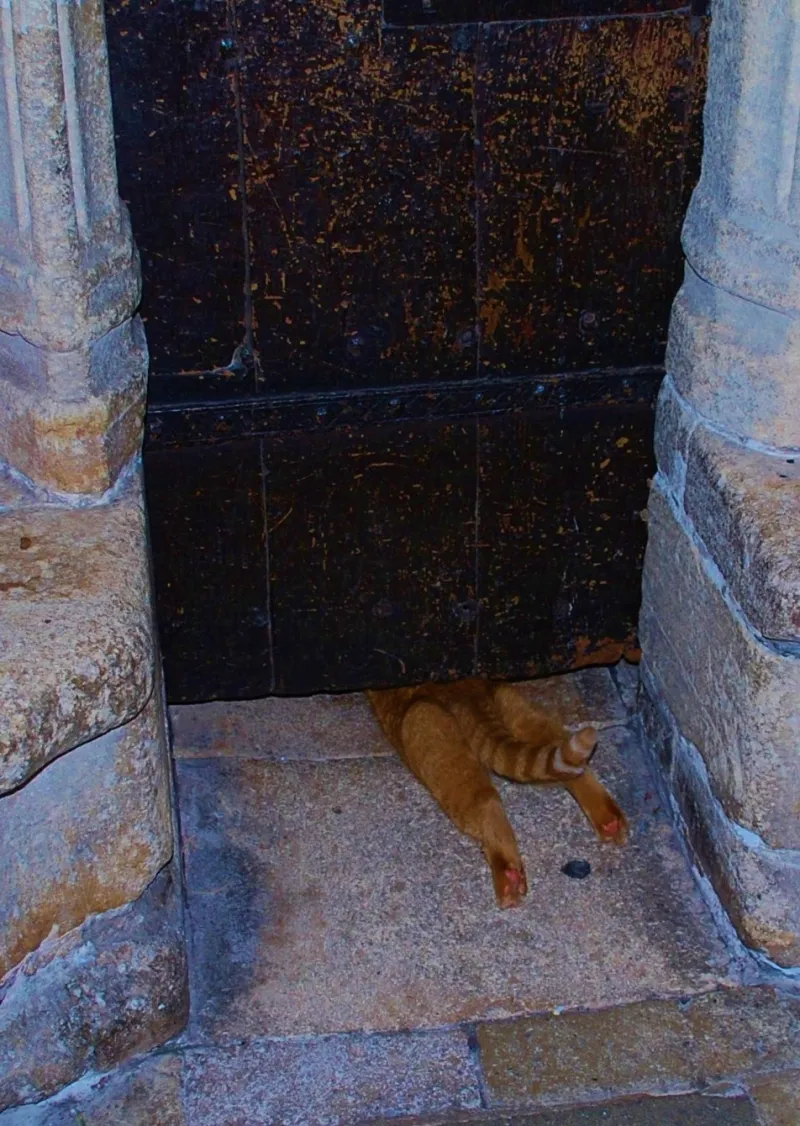
Photo: Roberta, CC BY 2.0, via Wikimedia Commons
You wake up on a Tuesday and your cat is basically a golden retriever — headbutting your shin, flopping dramatically onto your feet, demanding belly rubs with the urgency of a toddler on Christmas morning. By Thursday, that same cat is perched on top of the refrigerator, staring at you with the dead-eyed judgment of a disappointed therapist.
What happened? Did you do something wrong? Did they do something wrong? Is anyone okay?
Relax. Your cat hasn't developed a vendetta (probably). What you're witnessing is one of the most fascinatingly complicated behavioral phenomena in the pet world: the feline daily personality shift. And once you understand what's actually driving it, you'll never look at your cat's mood swings the same way again.
Your Cat's Internal Clock Is Running a Different Schedule Than Yours
Let's start with the basics. Cats are crepuscular creatures, meaning they're biologically wired to be most active at dawn and dusk — those golden, slightly inconvenient hours when you're either trying to sleep or attempting to drink your first cup of coffee in peace.
This isn't a personal attack. It's evolution. Wild cats hunted small prey that was most active at twilight, and your pampered indoor tabby is still running that same ancient firmware. Their circadian rhythms — the internal biological clock that regulates sleep, hormones, and energy levels — peak and valley at completely different times than a human's does.
What this means practically is that the cat who refused to acknowledge your existence at 2 PM on Wednesday was genuinely in a low-energy, low-interest phase of their daily biological cycle. The maniac who launched off your face at 5 AM Thursday? Peak activity window. Same cat. Totally different operating mode.
Hormones: The Unsung Villain of the Feline Mood Saga
Even spayed and neutered cats — which, if yours isn't, please call your vet — experience hormonal fluctuations that influence behavior. Cortisol, the stress hormone, can spike in response to environmental changes as subtle as a new smell drifting in through a window, a neighbor's dog barking two houses down, or the audacity of you rearranging the living room furniture.
Serotonin and dopamine also fluctuate based on social interaction, play, and even sunlight exposure. A cat who spent the morning sunbathing in a warm patch of light near the window has a genuinely different neurochemical profile by afternoon than one who was stuck in a dark apartment all day. Sunlight triggers serotonin production in cats just like it does in humans — which is why your cat's mood in January might look suspiciously like seasonal affective disorder.
For intact cats, the hormonal swings are even more dramatic. Unneutered males experience testosterone surges that can turn an otherwise chill cat into a territorial, pacing, yowling force of nature within hours.
The Environment Is Basically Your Cat's Emotional Remote Control
Here's where things get really interesting — and where you actually have some power in this situation.
Cats are exquisitely sensitive to environmental stimuli in ways that make human sensory systems look embarrassingly basic. Their hearing range extends far beyond ours, picking up ultrasonic frequencies we can't detect. Their sense of smell is estimated to be 14 times stronger than a human's. This means your cat is processing a constant flood of sensory data that you're completely oblivious to.
That sudden, unexplained freakout your cat had at 3 PM last Saturday? There was almost certainly a cause — you just couldn't perceive it. Maybe a car alarm three blocks away hit a frequency that rattled them. Maybe the mail carrier's cologne drifted under the door. Maybe a squirrel looked at them wrong through the window.
Common environmental triggers that can flip your cat's behavioral switch include:
- New scents (guests, shopping bags, other animals, your gym shoes after a workout)
- Changes in routine (your work schedule shifting, feeding times moving even slightly)
- Territorial visual stimuli (outdoor cats visible through windows, new neighborhood animals)
- Seasonal light changes (shorter days genuinely affect feline mood)
- Household stress (arguments, loud gatherings, construction noise nearby)
The good news? Identifying and managing these triggers gives you a surprising amount of influence over your cat's daily temperament. Consistent feeding times, predictable routines, and strategic window management can smooth out some of the wilder personality swings.
Individual Temperament: Because No Two Cats Got the Same Memo
All of the above applies to cats generally, but individual personality adds another layer of delightful chaos to the equation. Cats, like humans, have baseline temperaments shaped by genetics, early socialization, and life experience.
A cat who was handled frequently and positively between two and seven weeks of age — the critical socialization window — tends to have a more stable emotional baseline. A cat who had a traumatic kittenhood might be a hair-trigger away from a personality flip at any given moment, regardless of how calm the environment seems.
Breed also plays a role. Siamese cats are famously vocal and emotionally reactive, capable of going from affectionate to dramatically offended in roughly eleven seconds. Maine Coons tend toward a more even-keeled temperament. Bengals are basically the golden retrievers of the cat world — energetic, engaged, and occasionally exhausting. Knowing your specific cat's breed tendencies can help you calibrate your expectations.
Age matters too. Kittens are essentially chaos incarnate, with developing nervous systems and no impulse control. Senior cats often become more set in their ways, with less tolerance for disruption and more pronounced reactions when their routine shifts.
So Can You Actually Predict the Madness?
Somewhat — and honestly, that's better than most of us were expecting.
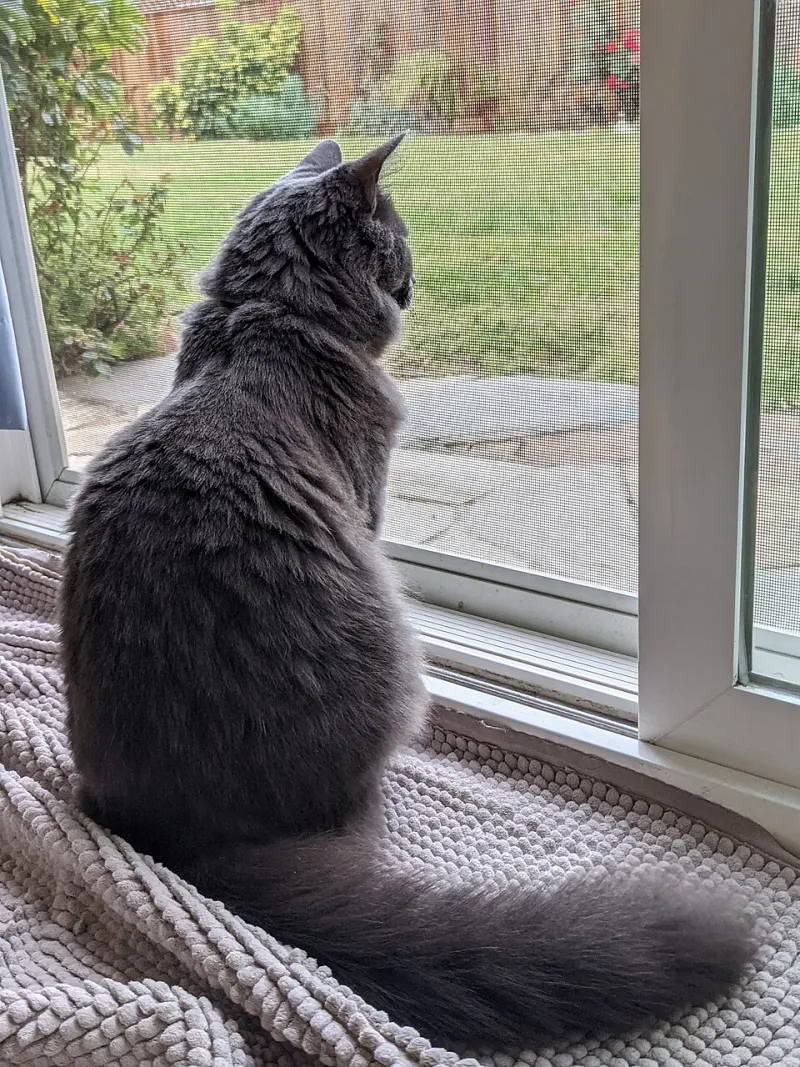
Start by tracking your cat's behavioral patterns over two weeks. Note the time of day, recent environmental events, feeding schedule, and activity level. You'll likely start to see patterns emerge. The 4 PM wall-staring session might consistently follow a period of outdoor-cat sightings through the back window. The sudden lap-cat transformation might reliably appear about twenty minutes after dinner.
A few practical moves that can help stabilize the emotional weather forecast:
Stick to a feeding schedule. Cats are creatures of routine, and predictable mealtimes reduce cortisol spikes significantly.
Provide enrichment during peak activity windows. Interactive toys, puzzle feeders, and play sessions scheduled around your cat's natural crepuscular peaks can channel that energy productively instead of into your ankles.
Create a consistent sensory environment. This doesn't mean a sterile, boring space — it means avoiding sudden, dramatic changes. If you're getting new furniture or having guests over, give your cat a quiet retreat space to decompress.
Don't take the aloof phases personally. This is perhaps the hardest one. When your cat retreats to the top of the bookshelf and regards you with magnificent indifference, it is not a referendum on your worth as a human. It's a cat doing cat things on cat time.
The Bottom Line on Feline Mood Swings
Your cat isn't broken, unpredictable for sport, or secretly plotting anything (probably). They're a remarkably complex creature navigating a constant stream of biological rhythms, hormonal shifts, sensory data, and individual temperament quirks — often in an environment that was designed entirely for humans.
The fact that they manage to be affectionate, entertaining, and genuinely bonded to you even amid all that internal complexity is, honestly, kind of impressive.
So the next time your cat transforms from a purring lap warmer into a cryptic sphinx statue between breakfast and lunch, just nod knowingly. You understand the science now. You've done the reading.
Your cat, of course, will remain completely unbothered by your newfound insight.