Boneless Wonder: The Jaw-Dropping Anatomy That Lets Your Cat Vanish Into Thin Air
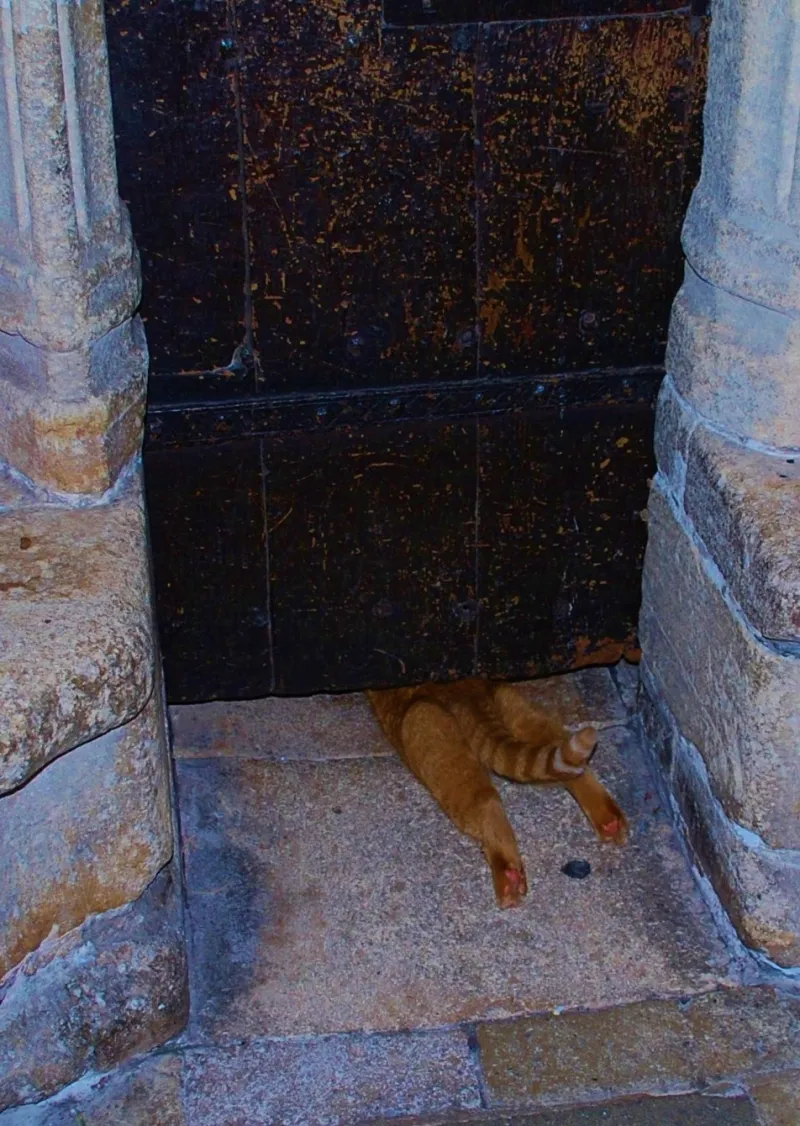
Photo: Barry Marsh, Public domain, via Wikimedia Commons
You've seen it happen. One second your cat is sitting right there, staring at you with the quiet judgment of a tenured professor. The next second, you turn around, and they have somehow poured themselves through a gap between the dryer and the wall that a folded slice of bread would struggle to navigate. You stand there, blinking, questioning your grip on reality.
Welcome to the club. Cat owners across the United States have been losing their minds over this particular phenomenon for centuries, and it turns out there's actual, genuinely fascinating science behind why your cat appears to be made of approximately 40% liquid.
The Collarbone That Basically Ghosted Its Own Job
Here's the anatomical plot twist that explains almost everything: cats have a clavicle — technically — but it's free-floating. Unlike your collarbone, which is firmly anchored between your shoulder and your sternum and does the very sensible job of limiting how narrow your shoulders can get, a cat's clavicle just kind of... vibes. It's embedded in muscle tissue without bony connections to the rest of the skeleton, which means it contributes almost zero structural restriction to the width of their front end.
The practical upshot of this evolutionary design choice? A cat can fit through any opening large enough to accommodate its skull. That's it. That's the whole rule. If the head fits, the body is coming through, whether you like it or not.
And cat skulls, for the record, are not as large as you think they are under all that fur. A domestic cat's head is roughly the size of a large orange. Go look at the gap between your washing machine and the cabinet next to it. Now look at an orange. Now look back at the gap. Now you understand the panic.
The Spine Is Doing What Now
If the floating clavicle is the opening act, the spine is the headliner. Cats have 30 vertebrae — humans have 33 total, but ours are fused at the bottom into the sacrum and coccyx, leaving us with considerably less flex. More importantly, the discs between each of a cat's vertebrae are exceptionally elastic, allowing for a degree of torsion and compression that would require a human to spend about twelve years doing hot yoga to approximate.
This is why cats can rotate their front and back halves in almost opposite directions simultaneously. It's why they can twist mid-air during a fall and land on their feet. And it's very much why they can compress their body lengthwise, sucking in their torso like they're doing an impression of a very determined tube of toothpaste, to navigate gaps that seem structurally incompatible with vertebrate life.
Combine the bendy spine with the useless collarbone and you get an animal that is, in practical terms, more of a suggestion of a solid object than an actual one.
Owner Dispatches from the Front Lines
The internet, bless it, is absolutely overflowing with testimonials from cat owners who have witnessed feats of escapology that would make Harry Houdini feel professionally threatened.
There's the classic scenario of the cat who discovered that the gap beneath a closed interior door — often less than an inch — is apparently a perfectly serviceable highway if you flatten yourself correctly and just commit to the bit. Multiple owners have reported watching their cats do exactly this, describing the experience as watching a cat-shaped liquid slowly drain through a crack in the floor.
Then there are the outdoor escape artists. Screen doors and window screens are, to a determined cat, basically a polite suggestion. One cat owner in suburban Ohio described installing what she referred to as a "maximum security perimeter" around her screened porch after her tabby, Gerald, repeatedly escaped through a gap she estimated at roughly two inches wide. Gerald, for the record, weighs eleven pounds. Gerald did not care about this discrepancy.
And of course, there are the cats who have figured out that the space between the back of a bookshelf and the wall is an entirely valid location to spend an afternoon, accessible via a gap that their owners genuinely did not know existed until a small, smug face appeared from within the wall like a feline poltergeist.
The Whisker Calibration System
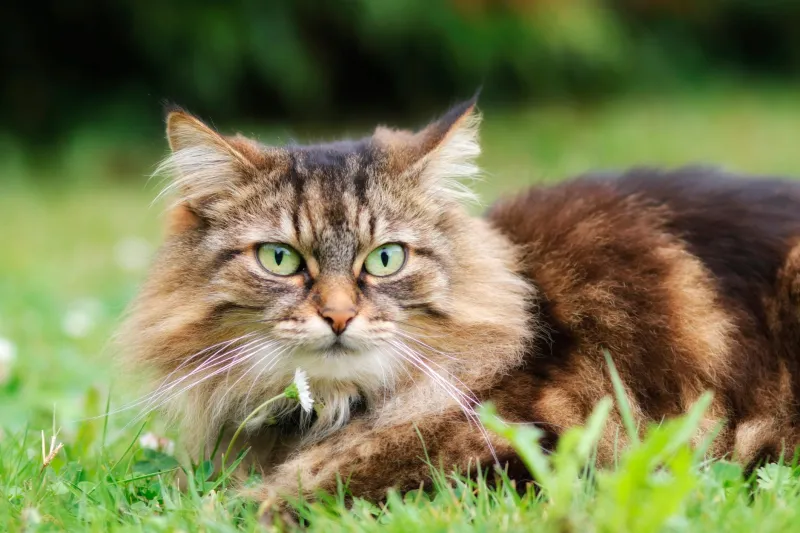
Here's a detail that will either reassure you or make things worse, depending on your perspective: cats actually have a built-in measuring device for exactly this purpose. A cat's whiskers extend roughly as wide as its body at the shoulders — the widest point that actually matters, given the free-floating collarbone situation. This means a cat can essentially use its whiskers to gauge whether a gap is navigable before committing to the attempt.
In low-light conditions, whiskers also provide tactile feedback as the cat moves through tight spaces, alerting them to contact points and helping them adjust their trajectory. They are, in essence, biological calipers attached to the face of an animal that is already built like an escape room puzzle.
The whisker system does have one important caveat: it only works when the whiskers are intact and when the cat isn't, say, overweight. Heavier cats can sometimes misjudge a gap because their whisker span no longer accurately represents their actual body width. This leads to the deeply relatable scenario of a chunky cat getting halfway through something and then having to do an embarrassing reverse maneuver. Dignity, as ever, is the first casualty.
So You Want to Actually Keep Your Cat Contained
For those of you engaged in an ongoing battle of wills with a feline Houdini, a few practical notes from the front lines of cat-proofing.
First, audit your space at cat level. Get down on the floor and look at your home from a cat's perspective. You will be horrified. Gaps you never noticed become obvious, and the sheer number of potential escape routes in a standard American home is genuinely alarming.
Draft stoppers and door sweeps can eliminate the under-door highway. For larger gaps — around appliances, inside closets, behind furniture — foam weatherstripping and hardware cloth are your friends. For windows, upgrade from standard screens to pet-resistant screen mesh, which is significantly more resistant to the determined application of cat claws.
For truly committed escape artists, "cat-proofing" a specific room or building a dedicated enclosed outdoor space (often called a "catio," a portmanteau that is both practical and delightful) may be the most effective long-term solution. Catios have become increasingly popular across the US as a way to give cats outdoor stimulation without the associated risks — and without the daily ritual of discovering your cat has once again materialized somewhere impossible.
The Takeaway
Your cat is not, technically speaking, defying physics. They are simply operating in full accordance with a set of anatomical specifications that evolution spent millions of years optimizing for exactly this purpose. The free-floating clavicle, the hyper-flexible spine, the whisker measurement system — it all adds up to an animal that is genuinely, legitimately built to go places it probably shouldn't.
The least you can do is appreciate the engineering. And maybe buy some better weatherstripping.