Sock Thief, Jewelry Bandit, Hair Tie Hoarder: The Unexpectedly Deep Reason Your Cat Steals Everything You Own
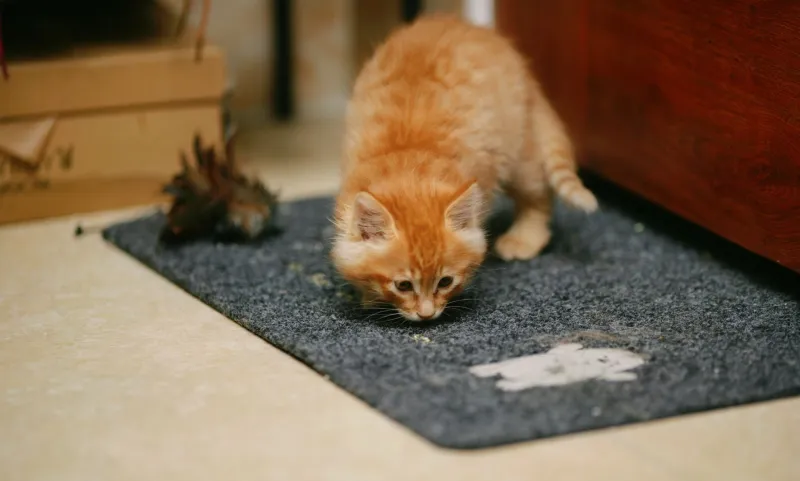
Somewhere in your home right now, there is almost certainly a stash. Maybe it's under the couch. Maybe it's behind the dryer. Maybe it's in that weird corner of the closet your cat disappears into at 2 a.m. like a tiny furry burglar casing the joint. Inside that stash: three hair ties, one AirPod, a crinkled candy wrapper, your favorite pen, and — inexplicably — a single baby sock that you don't even remember owning.
Congratulations. You are living with a kleptomaniac.
Cat theft is one of those behaviors that owners tend to chalk up to "cats being cats" and move on with their lives. But veterinary behaviorists and feline researchers have actually spent a non-trivial amount of time studying why your cat is running a black market out of your living room, and the answers are equal parts fascinating and a little bit humbling.
It's Not Random — Your Cat Has a Type
Here's the first thing that should unsettle you: your cat is not grabbing things at random. There is a pattern, and once you see it, you can't unsee it.
Most confirmed cat thieves gravitate toward objects with specific qualities. Small, lightweight, and easy to carry in the mouth. Slightly dangly or irregularly shaped. Things that smell strongly like you — worn socks, worn hair ties, a glove you left on the coffee table. The scent connection is key. Cats have a sense of smell that's estimated to be somewhere between 14 and 40 times more powerful than ours, and objects that carry your personal scent are, to your cat, practically a piece of you. Stealing your sock isn't random mischief. It might be the feline equivalent of keeping a photo of someone you love in your wallet.
That said, shiny objects and crinkly wrappers get swiped for a completely different reason: pure predatory instinct. Anything that catches light, makes noise, or moves unpredictably mimics the sensory profile of prey. Your cat isn't confused about what a hair tie is. It just triggers the same neural response as a fleeing mouse. The fact that it ends up under the refrigerator is simply a natural consequence of the hunt.
The Hoard: A Window Into Feline Psychology
What your cat does with the stolen goods is where things get genuinely interesting.
Some cats are displayers — they'll carry the item to a prominent location and leave it there like a trophy. Others are dedicated hoarders who cache their treasures in hidden spots, returning to check on them with the same energy as a dragon guarding gold. A subset of cats will yowl loudly while carrying their prize through the house, announcing the successful raid to anyone within earshot, which is chaotic and also extremely on-brand.
Behaviorists believe the hoarding instinct connects directly to a cat's ancestral programming. Wild cats and their close relatives cache food and valuable resources to protect them from competitors. Your domesticated tabby has never once needed to hide a kill from a rival predator, but that software is still running in the background. The impulse to stash things in a secure location is baked into the operating system, even if the "prey" is now a lip balm cap.
The trophy-carrying and yowling behavior is a bit different — that's more likely your cat seeking acknowledgment. Some behaviorists describe it as gift-giving behavior, the same instinct that causes cats to bring dead birds to your doorstep. Except this time, the gift is your own hair tie, which your cat has decided to re-gift back to you. The audacity is breathtaking.
When the Habit Is More Than Just Quirky
Here's where we have to briefly set down the laughs and get a little serious, because veterinarians genuinely do flag compulsive stealing as something worth monitoring.
In some cats, obsessive object collection is a symptom of a condition called pica — an urge to ingest non-food items. If your cat isn't just stealing wool socks but actually eating them, that's a medical situation, not a personality quirk. Wool sucking and fabric chewing are especially common in cats who were weaned too early, and ingesting fabric or rubber (hello, hair ties) can cause serious intestinal blockages. If you've noticed actual chewing or swallowing, a vet visit is non-negotiable.
Beyond pica, compulsive collecting can sometimes signal anxiety or understimulation. A cat who is bored, stressed, or lacking in environmental enrichment may redirect that energy into repetitive behaviors — including running a one-cat theft operation on your belongings. It's the feline version of stress-eating, just with more property crime involved.
The good news: for most cats, the behavior is genuinely harmless and just very, very funny.
How to Respond to Your Resident Cat Burglar
If your cat's sticky-paw habit is more amusing than alarming, you've got a few options beyond simply accepting your new role as unwilling fence for stolen goods.
First, redirect the energy. Cats who steal tend to be cats with strong prey drives and active minds. Puzzle feeders, interactive wand toys, and regular play sessions give that predatory circuitry somewhere constructive to go. A cat who's had a satisfying "hunt" at 7 p.m. is less likely to raid your sock drawer at midnight.
Second, consider leaving out a designated "legal" stash of cat-safe objects — small plush toys, crinkle balls, or foil pompoms — that your cat is explicitly allowed to collect and hoard. Some owners have reported genuine success with this approach, essentially setting up a licensed gift shop next to the previously unregulated black market.
Third, and perhaps most importantly, do a sweep. Check under furniture, behind appliances, and inside any cozy cat hideouts on a semi-regular basis. Your missing AirPod is probably fine. Your missing hair tie that your cat has been chewing on is less fine. Knowing what's in the stash keeps you informed and keeps your cat safe.
The Bottom Line on Feline Felonies
Your cat is not stealing from you out of malice or spite (probably). It's stealing from you because it's wired to hunt, cache, and collect — and because your worn-out gym sock apparently smells like the greatest treasure in the known universe. That's equal parts insulting and endearing, which is, honestly, the cat experience in a nutshell.
So the next time you find a little pile of absconded goods tucked behind the couch cushion, take a moment before you reclaim your property. You're looking at millions of years of feline evolution, expressed through the medium of your missing ponytail holder.
It's not a crime scene. It's a nature documentary. You just happen to live in it.