Eyes Wide Shut: Is Your Cat's Adorable Slow Blink a Genuine Kiss or a Con Job?
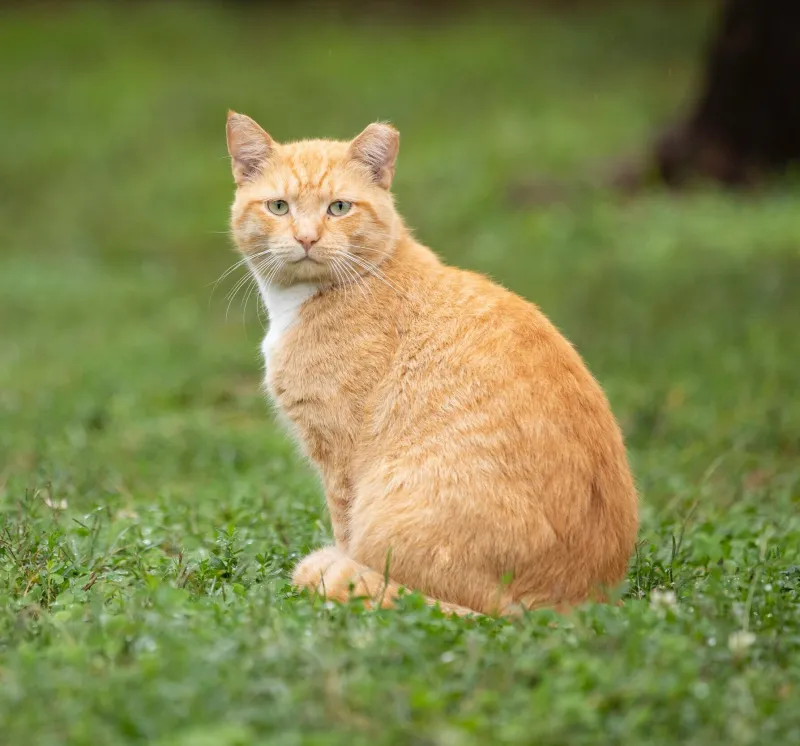
Photo: cat slow blink close up eyes half closed looking at camera, via images.squarespace-cdn.com
Picture the scene. You're sitting on the couch, minding your own business, maybe watching Netflix, definitely not thinking about cats. Then your cat materializes on the armrest — as cats do, defying both physics and personal boundaries — and fixes you with a long, heavy-lidded gaze. Slowly, almost theatrically, those eyes close halfway and reopen. Your heart melts. You immediately offer a treat, a belly rub, and possibly your entire net worth.
Congratulations. You may have just been played.
The slow blink is perhaps the most famous gesture in the entire human-cat communication playbook. It's been called the "cat kiss," the "eye kiss," and roughly ten thousand variations of "aww, my baby loves me" across every corner of the internet. But before you go scheduling a matching tattoo with your tabby, it's worth asking a genuinely unsettling question: does your cat actually mean it?
What Science Says (And Doesn't Say)
In 2020, researchers at the University of Sussex and Portsmouth published a study in Scientific Reports that made cat lovers everywhere absolutely lose their minds in the best possible way. The study found that cats were more likely to slow blink at humans after the humans slow blinked at them first, and that cats tended to approach unfamiliar experimenters more readily after receiving a slow blink. The conclusion? The slow blink functions as a positive emotional signal. A form of feline friendliness. A tiny, furry olive branch.
Cue a million Instagram posts captioned "SCIENCE CONFIRMED MY CAT LOVES ME."
But here's where it gets complicated — and honestly, more interesting. The study confirmed that cats respond to slow blinks and that the gesture correlates with positive interaction. What it did not confirm, with anything approaching certainty, is why cats do it, whether they experience the warm fuzzy feelings we project onto them, or whether they've simply learned that drooping their eyelids at a human produces desirable results. There is a meaningful difference between "my cat loves me" and "my cat has discovered a highly efficient system for acquiring resources."
Guess which interpretation cats would prefer you not examine too closely.
A Brief History of the Blink
Here's a fun fact that adds a delightful layer of paranoia to this whole situation: cats almost certainly developed the slow blink as a learned behavior in response to humans, not as some ancient, hardwired expression of feline emotion.
Wild cats don't really do this to each other. Extended eye contact in the feline world is actually a dominance signal — a challenge, not a cuddle. Two cats staring each other down in an alley are not exchanging romantic glances. They are negotiating territory with their eyeballs. So the slow blink, with its deliberate softening of the gaze, likely evolved as a way for domesticated cats to communicate "I am not a threat" to the giant, confusing primates who control the food supply.
In other words, the slow blink may have started as a de-escalation tactic and gradually got promoted to "primary love language" by an audience of humans who were very eager to believe their cats adored them. Cats, being cats, almost certainly noticed this was working and leaned into it hard.
The Treat Economy Is Real
Let's talk about incentive structures for a moment, because your cat absolutely has one.
Cats are sophisticated observers of cause and effect. They know which cabinet the treats live in. They know which human is the softest touch. They know that a well-timed slow blink, deployed at the correct moment — say, approximately four minutes before their scheduled dinner — produces results. Affection, attention, food, or all three. From an evolutionary standpoint, any behavior that reliably produces food without requiring significant energy expenditure is a behavior worth repeating.
This doesn't mean the slow blink is purely transactional. Cats are not tiny, furry con artists with spreadsheets (probably). But it does mean that the line between genuine affection and highly refined manipulation is blurrier than those melting eyes would have you believe.
So... Does My Cat Actually Like Me?
Alright, here's the part where we stop being cynical for thirty seconds and acknowledge the full picture.
The research does suggest that slow blinking is associated with positive emotional states in cats. When your cat slow blinks at you, they are likely not miserable. They are probably calm, comfortable, and not actively plotting your downfall — at least not in that specific moment. That's meaningful! Cats are not obligated to engage with humans at all. The fact that domesticated cats developed a gesture specifically for human interaction, and that it correlates with relaxed, friendly behavior, does suggest something real is happening.
It's just that "something real" exists on a spectrum that runs from "deep emotional bond" all the way to "expert-level resource acquisition strategy," and your cat's position on that spectrum may vary by time of day, proximity to the treat cabinet, and whether or not you've recently failed to open a door quickly enough.
How to Slow Blink Back (Without Looking Ridiculous)
The good news from the Sussex study is that you can absolutely participate in this ritual, and it appears to actually work. To return a slow blink, make soft eye contact — not the intense, unblinking stare that cats interpret as aggression — and slowly close your eyes halfway, hold for a beat, then reopen. Add a slight smile if you want to lean into the full experience. The researchers found that cats responded positively to this, approaching humans more readily and returning the gesture.
Yes, you are essentially learning to speak a language your cat may have invented specifically to extract snacks from you. But you know what? That's fine. That's the deal. That's always been the deal.
The Verdict
Is the slow blink genuine affection or calculated manipulation? Honestly? Almost certainly both, simultaneously, in proportions that shift constantly and will never be fully disclosed to you.
Your cat has had ten thousand years of practice at being charming enough to live rent-free in human homes while contributing approximately zero to household chores. The slow blink is just the latest tool in a very long, very effective toolkit. Does that make it less meaningful? Maybe a little. Does it make it less adorable? Absolutely not.
Slow blink back. Give the treat. Accept that you will never fully understand what's happening behind those half-closed eyes.
Some mysteries, it turns out, are better left unsolved.