Cast Iron Stomach: The Weird Biology That Lets Your Cat Eat Garbage and Shrug It Off
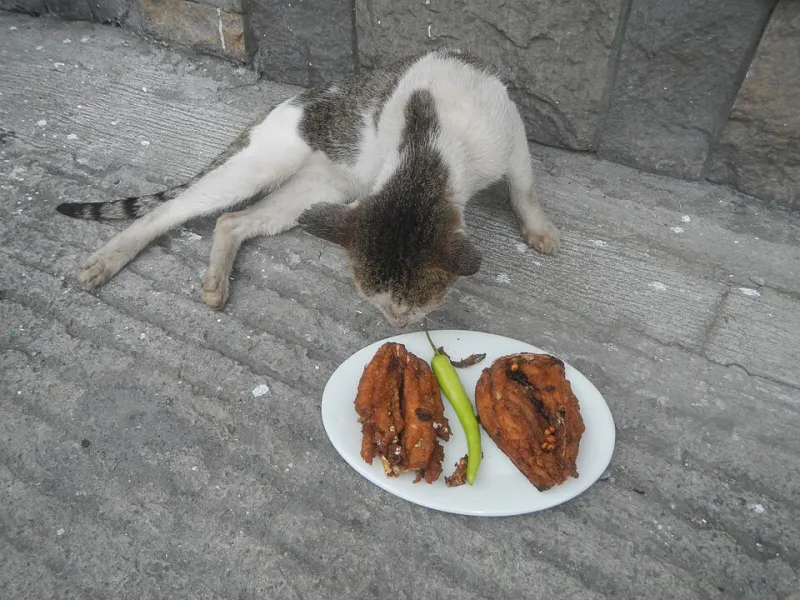
Picture the scene: your cat has just triumphantly dragged in something unidentifiable from the backyard, eaten it with the enthusiasm of a competitive hot dog contestant, and is now calmly grooming itself on your couch like absolutely nothing happened. Meanwhile, you're spiraling into quiet panic, Googling "cat ate mystery meat will it die" at 11 p.m. Spoiler: it probably won't. And the reason why is genuinely fascinating.
Cats are, biologically speaking, remarkably well-armored against the kind of culinary chaos they routinely inflict on themselves. Their bodies have evolved a suite of tools that would make a food safety inspector weep with either admiration or despair, depending on their disposition. Let's break down exactly what's going on inside that furry little garbage disposal you call a pet.
The Stomach Acid Situation Is No Joke
Let's start at the front door: the stomach. A cat's gastric acid is significantly more potent than a human's, clocking in at a much lower pH level. This isn't just a fun trivia fact — it's a genuine biological kill switch for a wide range of bacteria. Salmonella, E. coli, and other microbial troublemakers that would send a human to urgent care? A cat's stomach environment is essentially a hostile wasteland for those organisms.
This adaptation makes total sense when you consider what cats evolved to eat. Wild felines don't have the luxury of checking expiration dates. They eat fresh kills, sure, but they also scavenge, snack on prey that's been sitting in the sun, and occasionally make extremely questionable dietary decisions. Natural selection basically spent millions of years stress-testing the feline digestive system, and what survived is impressively robust.
Their digestive tract is also shorter than a human's, which means food — and anything sketchy riding along with it — moves through faster. Less transit time means fewer opportunities for harmful bacteria to set up shop and cause problems. It's a high-speed eviction notice for pathogens.
The Liver: A Chemical Processing Plant With Caveats
Here's where things get interesting — and a little counterintuitive. Cats have a liver that is, in some ways, both their superpower and their Achilles heel.
On the impressive side: feline livers are highly efficient at processing animal-based proteins and the biological compounds that come with a carnivorous diet. They've been fine-tuned over millennia to handle the chemical complexity of raw meat, organ tissue, and all the weird stuff that comes bundled with a prey-based lifestyle.
But — and this is a significant but — the feline liver is notably deficient in certain detoxification enzymes that mammals like dogs and humans rely on to break down a wide range of synthetic and plant-based compounds. Specifically, cats lack robust glucuronidation pathways, which are responsible for metabolizing everything from certain medications to specific plant chemicals.
This is why things like acetaminophen (Tylenol), aspirin, and certain essential oils are genuinely dangerous for cats even in small amounts. What your liver handles with casual efficiency, a cat's liver simply cannot process. The result can be toxic buildup that becomes life-threatening fast. So yes, your cat can eat a three-day-old piece of chicken off the kitchen floor and be completely fine — but a single regular-strength Tylenol could kill it. Biology is wild.
The Vomit Option: Disgusting but Effective
Let's talk about something every cat owner knows intimately: the strategic vomit. Cats have a remarkably low threshold for voluntary emesis, which is a fancy way of saying they can and will throw up with almost suspicious ease. Eaten something that isn't sitting right? Problem solved, usually on your most expensive rug.
This isn't just a quirk. It's a functional defense mechanism. Because cats are obligate carnivores who sometimes eat things like fur, feathers, and bones, the ability to quickly reverse course on a bad meal is enormously useful. The same reflex that produces hairballs is also a rapid-response system for anything that the stomach flags as problematic.
Humans, by contrast, have a much higher vomiting threshold, which is part of why food poisoning hits us so much harder — our bodies are slower to initiate the purge response. Your cat, meanwhile, has basically pre-installed a self-cleaning function.
What Actually Can Harm Them (Pay Attention Here)
For all of their digestive resilience, cats are not invincible. The list of genuinely dangerous foods and substances is worth committing to memory, because several of them are common household items that seem completely harmless.
Onions and garlic — even in powdered form — contain compounds that destroy feline red blood cells, causing a form of anemia that can develop slowly and be missed until it's serious. A little garlic bread shared as a treat is not a one-time harmless snack; it's a cumulative risk.
Grapes and raisins remain somewhat mysterious even to veterinary researchers — the exact toxic mechanism isn't fully understood — but they're reliably associated with acute kidney failure in cats and dogs.
Xylitol, the artificial sweetener found in sugar-free gum, certain peanut butters, and a growing number of "healthy" food products, is extremely dangerous. While cats are less likely than dogs to consume it in large quantities (they can't taste sweetness, so sugary products don't appeal to them the same way), exposure is still a serious risk.
Lilies deserve special mention because the danger is so disproportionate to how innocent they look. True lilies — Easter lilies, tiger lilies, daylilies — are lethally toxic to cats. Even small amounts of pollen, a nibble on a leaf, or water from a vase containing lilies can cause rapid kidney failure. This is not a "monitor and see" situation. Lily exposure in cats is a get-to-the-vet-immediately emergency.
The Takeaway: Respect the System, Know Its Limits
Your cat's digestive resilience is a genuine biological achievement, the product of an evolutionary history that demanded serious toughness. When your cat eats something questionable and struts away unscathed, it's not luck — it's millions of years of field-testing paying off.
But that confidence can become dangerous if it breeds complacency. The same biological quirks that make cats so resistant to bacterial contamination also make them uniquely vulnerable to a specific set of toxins that other animals handle without issue. The system is specialized, not universal.
So next time your cat inhales something from the floor that you can't identify and you feel that familiar wave of panic — take a breath. The odds are genuinely in your favor. Just make sure your lilies are fake, your Tylenol is locked up, and your garlic bread is out of reach. The cast iron stomach has its limits, and knowing where they are is the whole game.