Chaos Mode Activated: The Real Science Behind Your Cat's Hourly Personality Overhaul
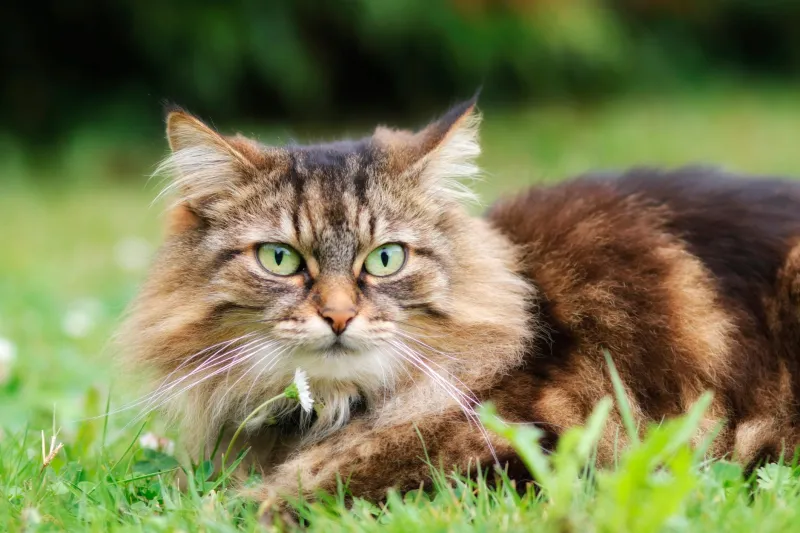
Photo: cat with wide eyes funny expression indoors, via www.rd.com
You've seen it happen. Your cat is draped across your lap like a warm, purring throw blanket, radiating contentment and peace. You think, this is the cat I signed up for. Then, without any discernible trigger, those eyes go wide, those pupils blow out to the size of dinner plates, and your beloved companion launches off your thighs — using your kneecaps as a launchpad — and tears through the apartment at full gallop for absolutely no reason.
Welcome to life with a cat. Population: you, confused, and one highly complex biological machine wearing a fur coat.
Here's the thing: your cat's mood swings aren't random. They're not a glitch. They're not even particularly dramatic by feline standards. They are, in fact, the entirely predictable output of millions of years of evolutionary programming running in real time inside your living room. Science has a lot to say about this. Let's get into it.
The Internal Clock That Never Quite Matches Yours
Cats are crepuscular animals, which is a fancy way of saying they are biologically wired to be most active at dawn and dusk. This isn't a lifestyle choice — it's hardwired into their circadian rhythms, the internal 24-hour biological clock that governs sleep, hormone release, body temperature, and energy levels.
In the wild, those twilight hours are prime hunting time. Low light gives cats a serious advantage because their eyes are built to detect motion in near-darkness with remarkable efficiency. So when your cat starts losing its mind at 5 a.m. or goes absolutely feral right around dinnertime, it's not being difficult. Its entire nervous system is essentially screaming it's go time at a volume only cats can hear.
The tricky part for domestic cats — and for their sleep-deprived owners — is that house life doesn't always align with this ancient schedule. Many cats adapt somewhat to human routines over time, but the underlying biology doesn't fully budge. Those crepuscular surges still fire. The energy has to go somewhere. Sometimes that somewhere is your face.
The Hunter Inside the Housecat
Even the chunkiest, most sedentary couch potato of a cat carries within it the neurological blueprint of a predator. And predators, it turns out, don't just run on a single emotional setting.
Feline hunting behavior is a cycle, not a single act. It involves stalking, chasing, pouncing, catching, and then a distinct post-hunt wind-down. Each phase comes with its own hormonal cocktail. During the stalk-and-chase phase, adrenaline and dopamine surge. After a successful "catch" — even if that catch is a crinkle ball you tossed across the kitchen — there's a brief dopamine high followed by a fairly rapid comedown.
This is why your cat can go from laser-focused predator mode to completely checked out within about four minutes. The hunt cycle completed, the brain essentially files it away and moves on. You're left holding a feather wand while your cat stares blankly at the wall, spiritually elsewhere.
If the hunt cycle is interrupted — say, the toy gets boring, or your cat never quite lands the pounce — that pent-up predatory energy can curdle into frustration, redirected aggression, or the classic sudden zoomies. The body needed to complete the loop, and it found another way.
Territorial Mood Weather
Cats are territorial animals, and their emotional state is deeply tied to how secure they feel in their space at any given moment. This is more nuanced than it sounds. A cat's territory isn't just a physical area — it's a layered, scent-mapped, time-stamped mental map of who was where and when.
If something shifts in that map — a new smell on your clothes, a strange cat visible through the window, a piece of furniture moved two inches to the left — your cat's stress hormones can spike noticeably. What looks like a sudden personality shift (sweet cat becomes standoffish cat in under an hour) is often a territorial threat response that you never even noticed triggering.
Conversely, when a cat feels completely secure in its territory — all smells familiar, all threats assessed and dismissed — you get the full affectionate experience. The slow blink. The head bump. The kneading that's adorable right up until it's not.
The Neuroscience of the Slow Blink (and the Sudden Bite)
Cats experience emotions differently than humans do, and their brains are wired to move between states quickly. The feline amygdala — the part of the brain that processes emotional responses — is highly reactive and fast-acting. This is an asset in the wild, where the difference between threat and non-threat needs to be assessed in milliseconds.
In your living room, this same rapid-response system means that your cat can go from genuinely enjoying being petted to genuinely done with being petted in the span of about three strokes. Researchers call this "petting-induced aggression," but really it's just sensory overstimulation. The nerve endings in cat skin are sensitive enough that prolonged touch can cross from pleasant to irritating very quickly — and the brain acts accordingly.
This isn't your cat being dramatic. This is your cat's nervous system doing exactly what it was designed to do. The trick is learning to read the early warning signs: the tail flick, the skin twitch, the ears rotating back like tiny satellite dishes picking up a bad signal.
So What Does All This Mean for You?
Honestly? It means your cat is not confused, not bipolar, and not secretly plotting against you (probably). It means you're sharing your home with an animal whose emotional life is governed by ancient biology operating on a timeline that doesn't always sync up with Netflix and a quiet Tuesday evening.
Understanding the science behind feline mood cycling actually makes cat ownership considerably more enjoyable. When you recognize the pre-zoomies stare as a hunting instinct that needs an outlet, you can grab a toy wand instead of just watching in bewildered horror as your cat does laps around the couch. When you spot the territorial stress signals, you can address the source instead of wondering why your cat is giving you the silent treatment.
Your cat isn't moody. Your cat is magnificently, exhaustingly, endlessly fascinating. And now you have the science to prove it.