Lost in Translation: Decoding the Secret Signals Your Cat Has Been Sending You All Along
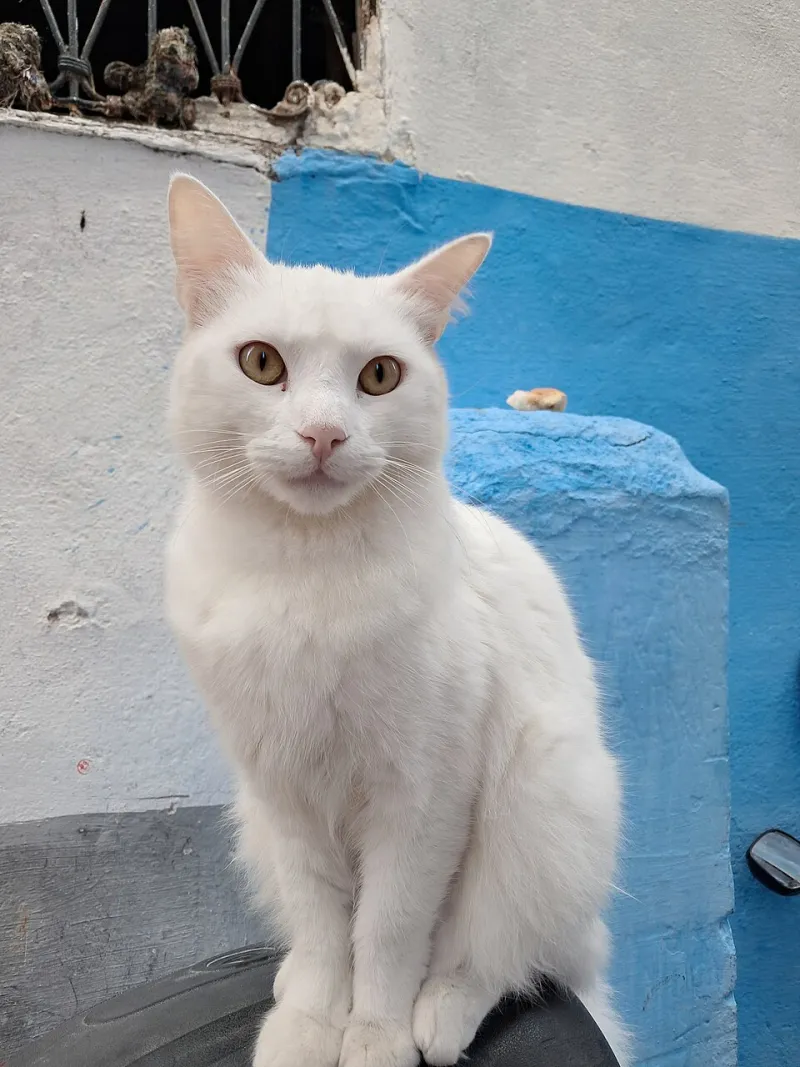
Photo: Ideophagous, CC BY-SA 4.0, via Wikimedia Commons
You've done everything right. You bought the fancy food. You got the ergonomic cat tree. You even let Mr. Whiskers knock your favorite coffee mug off the counter without so much as a stern look. And yet, when you call your cat's name from across the room, he glances up with the emotional warmth of a government auditor and goes right back to staring at the wall.
Congratulations — you've just experienced the most misunderstood moment in the history of pet ownership.
Here's the truth: your cat is not ignoring you. Your cat is communicating with you in a highly sophisticated, nuanced language that humans have been spectacularly bad at reading for thousands of years. And once you understand what's actually being said, you'll never look at that slow tail flick the same way again.
The Slow Blink: Your Cat's Version of a Love Letter
Let's start with the good news. If your cat has ever looked at you from across the room, half-closed their eyes, and given you a long, lazy blink, you have received one of the highest compliments in the feline world. Cat behaviorists call this the "slow blink" or, more poetically, the "cat kiss." It's your cat's way of saying, I trust you completely, I feel safe, and I'm genuinely happy you're here.
This isn't just feel-good speculation, either. A 2020 study published in Scientific Reports from the University of Sussex found that cats are more likely to slow-blink back at humans who slow-blink at them first — and they're even more likely to approach a stranger who offers a slow blink over one who maintains a neutral expression. So the next time you want to have a heart-to-heart with your cat, skip the words and try the eyes. It's basically fluent cat for "I love you, buddy."
Pro tip: squinting slightly while you blink helps sell it. Think of it as adding punctuation.
The Tail Tells All (And It's Not Always Pretty)
A cat's tail is basically a mood ring that never lies, and learning to read it is one of the fastest ways to understand what's going on in that fuzzy little head.
- Tail straight up, tip slightly curved: This is your cat's version of a warm wave hello. A vertical tail is a sign of confidence and affection — they're genuinely glad to see you.
- Tail puffed up like a bottle brush: Something has gone very wrong. Your cat is either terrified or furious (sometimes both), and the fluffed tail is designed to make them look bigger. Give them space. Do not pick them up. Just... step away slowly.
- Slow, sweeping tail flick: Often misread as contentment, this one is actually a yellow flag. A slow, deliberate back-and-forth swish typically signals that your cat is mildly agitated or overstimulated. If you've been petting them for a while and the tail starts moving like a metronome, that's your cue to pause before the situation escalates.
- Tail wrapped around your legs or another cat: Pure affection. Think of it as a cat hug.
The Classic "Walk-By" Is Not Indifference — It's a Compliment
You're sitting on the couch. Your cat saunters in from the hallway, makes deliberate eye contact with you, walks directly past without stopping, and disappears into the bedroom. You feel rejected. You probably deserve better.
Except — you don't, because that walk-by was actually a sign of trust and comfort. Cats in the wild are both predators and prey, which means they're hardwired to be acutely aware of their surroundings at all times. When a cat walks calmly through a space where you're present without going on high alert, it means they feel completely secure with you in the room. You are so non-threatening, so deeply trusted, that you barely register as a concern.
Is that a little humbling? Sure. But in cat terms, being treated like a piece of comfortable furniture is basically a standing ovation.
Slow Kneading: The Blanket Biscuit Phenomenon
If you've ever had a cat rhythmically push their paws into your stomach like they're making sourdough bread, welcome to one of the most endearing behaviors in the feline repertoire. Kneading — or "making biscuits" as the internet has lovingly named it — originates in kittenhood, when young cats knead their mother's belly to stimulate milk flow.
When adult cats knead on you, your lap, or a soft blanket, they're essentially reverting to that earliest feeling of warmth, safety, and contentment. It's a deeply involuntary comfort behavior. The fact that your cat kneads on you specifically means you are, in their emotional vocabulary, associated with the very best feelings they know.
Yes, the claws can be a problem. Invest in a thick blanket. It's worth it.
Chattering, Chirping, and the Existential Frustration of the Window Bird
If you've ever watched your cat spot a bird through the window and start making that bizarre, rapid jaw-clicking sound — somewhere between a chatter and a chirp — you've witnessed one of the more delightfully strange things cats do. Researchers believe this sound may be an involuntary response to the intense predatory excitement of seeing prey they can't reach. Some theorize it mimics the kill bite. Others think it's pure, unfiltered frustration.
Either way, your cat is not malfunctioning. They are simply experiencing the feline equivalent of seeing your favorite food on a menu, ordering it, and being told they're out of it. We feel you, buddy.
The Belly Trap: A Warning That Has Claimed Many Hands
And finally, a word about the belly. When a cat rolls onto their back and exposes their stomach, it looks like an invitation. It is not always an invitation. The belly is the most vulnerable part of a cat's body, and exposing it is a sign of deep trust and relaxation — but that doesn't automatically mean they want you to touch it.
Some cats genuinely love belly rubs. Others are setting what can only be described as a trap. The key is to know your specific cat and proceed with caution. Watch the tail, watch the ears, and for the love of all things holy, if the ears go flat, abort immediately.
The Bottom Line on Cat Communication
Cats aren't aloof. They're not cold, mysterious, or emotionally unavailable — at least, not in the way we've always assumed. They're speaking constantly, with their tails and their eyes and their slow, deliberate walks through your living room. The real issue has never been that cats don't communicate. It's that humans stopped paying close enough attention to listen.
Start watching, and you'll quickly realize your cat has had plenty to say. They've just been waiting for you to catch up.