No Privacy Allowed: The Hilariously Invasive Reason Your Cat Supervises Every Bathroom Trip
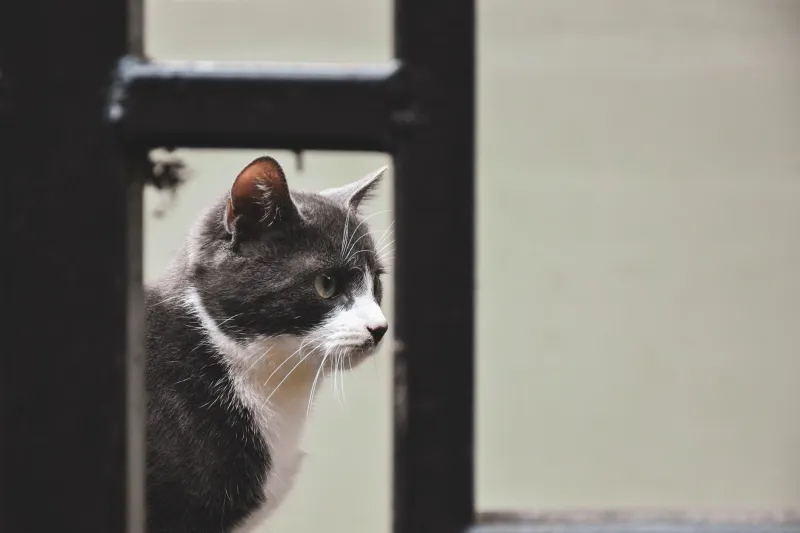
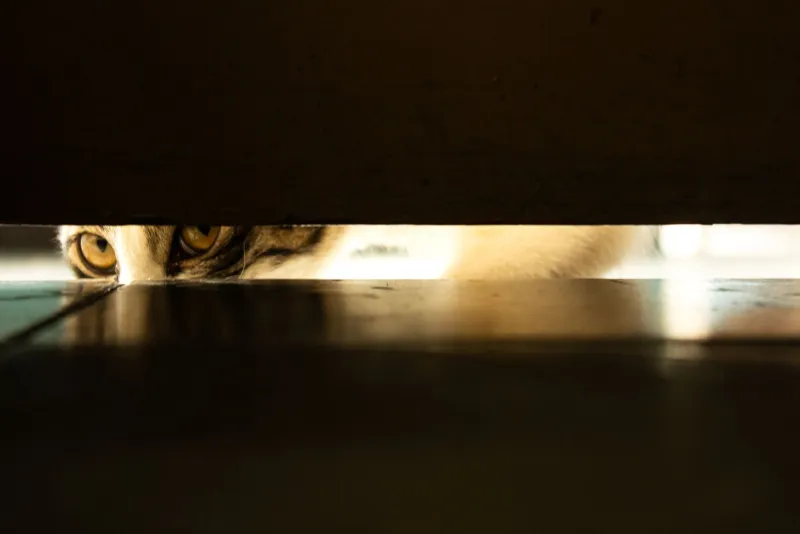
Let's set the scene. It's 7:15 on a Tuesday morning. You shuffle to the bathroom, close the door, and exhale — just thirty seconds of blessed solitude before the day begins. Then it starts. The scratching. The meowing. The theatrical flop against the door frame the moment you crack it open, as if your cat has been waiting there for forty-five minutes in a state of genuine emotional crisis.
Spoiler: they probably have.
Whether you're a first-time cat owner or a seasoned veteran of feline surveillance, the bathroom supervision situation is one of the great universal experiences of living with a cat. It's weird, it's invasive, and it happens with a consistency that would impress even the most dedicated hall monitor. So what exactly is going on in that fuzzy little head? Let's break it down.
Your Cat Thinks You're Doing It Wrong (And They Want to Help)
Here's the thing about cats: they are, at their evolutionary core, deeply suspicious creatures. In the wild, a solitary animal that wanders off alone and stays gone for an extended period is either hunting or in serious trouble. Your cat's ancient brain hasn't quite caught up to the concept of indoor plumbing, which means every bathroom trip registers as a potential emergency.
From your cat's perspective, you have walked into a small, enclosed room, closed yourself in, and made a series of inexplicable sounds involving running water. You've been in there for several minutes with no visible prey to show for it. This is, objectively, a red flag situation.
Behavioral researchers note that cats form strong social bonds with their humans and actively monitor their whereabouts. Your cat isn't being nosy for the fun of it — well, not only for the fun of it. They genuinely experience something resembling concern when you disappear behind a closed door. You are, in their mind, a large, slow-moving companion who occasionally needs supervision to survive.
The Territory Problem (It's Always About Territory)
If you've spent any time reading about cat behavior, you already know that territory is basically the organizing principle of feline existence. Cats map their environments obsessively, and every room in your home is a documented sector of their personal kingdom.
The bathroom, with its running water, interesting smells, and warm surfaces, is prime real estate. When you shut the door, you're not just seeking privacy — you're unilaterally closing off a section of the territory. Your cat cannot patrol a room they can't access. They cannot inspect the perimeter. They cannot ensure that nothing weird is happening on the other side of that door.
This is a territorial crisis masquerading as clinginess, and your cat is handling it the only way they know how: loudly, and with maximum inconvenience to you.
Closed Doors Are a Personal Insult
Beyond territory, there's a simpler explanation that any cat owner will immediately recognize: cats treat closed doors as a direct affront to their dignity.
Think about it. Your cat can walk through every other room in the house at will. The kitchen, the bedroom, the living room — all accessible, all appropriately surveilled. Then you go and create an exception, and suddenly the one room they can't enter is the most fascinating place on earth. It's the forbidden fruit principle, and cats fall for it every single time.
Animal behaviorists describe this as "contra-freeloading" behavior — the tendency to work harder for something that requires effort to obtain, even when an easier option exists. Your cat doesn't want access to the bathroom because it's particularly thrilling. They want it because you said they couldn't have it. The closed door is a challenge, and cats do not back down from challenges.
The Vulnerability Factor (Your Cat Might Actually Be Onto Something)
Here's where it gets a little less funny and a little more touching. Cats are acutely attuned to vulnerability. In multi-cat households, cats will often sit with a sick or injured companion — not to help, exactly, but to monitor. They notice when something is off.
You, sitting quietly in a small room for several minutes, might actually be triggering your cat's caretaking instincts. You're still, you're enclosed, and you're not doing anything that looks like normal human activity. To a cat who watches you closely enough to know your daily patterns — and they do, trust me — this is unusual behavior that warrants investigation.
Is your cat being sweet? Sort of. Is it also wildly inconvenient? Absolutely. But there's something genuinely endearing about the idea that your cat's bathroom surveillance is, at least partially, an act of concern. They're not judging you. They're checking on you. Mostly.
The Water Obsession Is Its Own Whole Thing
Let's not overlook the obvious: bathrooms have running water, and a significant percentage of cats are absolutely fascinated by running water. The sound of a faucet, the visual shimmer of a stream, the inexplicable joy of batting at a dripping tap — these are documented feline pleasures.
Many cats prefer drinking from moving water sources, which is why the pet industry has built an entire category of fountain-style water bowls. Running water signals freshness in the wild, and that instinct doesn't disappear just because your cat now eats from a ceramic bowl with their name on it.
So when your cat hears the shower running or the toilet flushing, they may simply be responding to the siren call of water. The bathroom is, from a cat's perspective, basically a water park. Of course they want in.
What to Do About Your Furry Bathroom Attendant
If your cat's bathroom fixation has become less "charming quirk" and more "daily negotiation," there are a few things worth trying. Enrichment activities near the bathroom door — a puzzle feeder, a favorite toy — can give your cat something to do while you handle your business. Some owners find that simply leaving the door open resolves the obsession entirely, since the room loses its forbidden-fruit appeal almost immediately.
You can also try establishing a pre-bathroom ritual that signals you'll be back soon: a treat, a quick chin scratch, a specific phrase your cat associates with your return. Cats are creatures of pattern, and a reliable signal can do a lot to reduce the anxiety (theirs) and the noise (yours).
Or, you know, you can just let them in. Accept your fate as a person who uses the bathroom with an audience. Millions of cat owners have made peace with this arrangement, and honestly? The judgmental stare is a small price to pay for the company.
The Bottom Line
Your cat's bathroom supervision habit is equal parts territorial instinct, separation anxiety, curiosity, and the deeply feline inability to accept a closed door as a reasonable boundary. It's not personal — except for the part where it absolutely is.
The good news is that it means your cat is bonded to you, paying attention to your patterns, and genuinely invested in your wellbeing. The bad news is that "invested in your wellbeing" and "willing to give you five minutes alone" are not the same thing, and your cat has made their position on that very clear.
Welcome to the club. There are no locks that will help you.