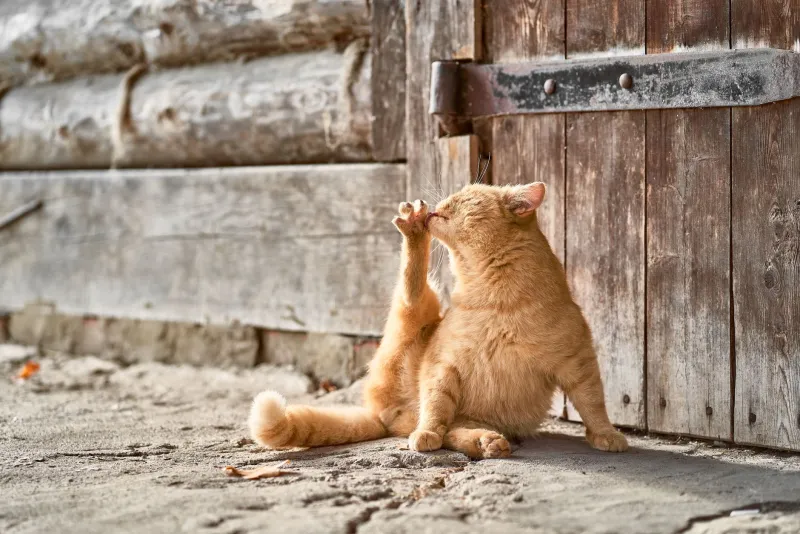
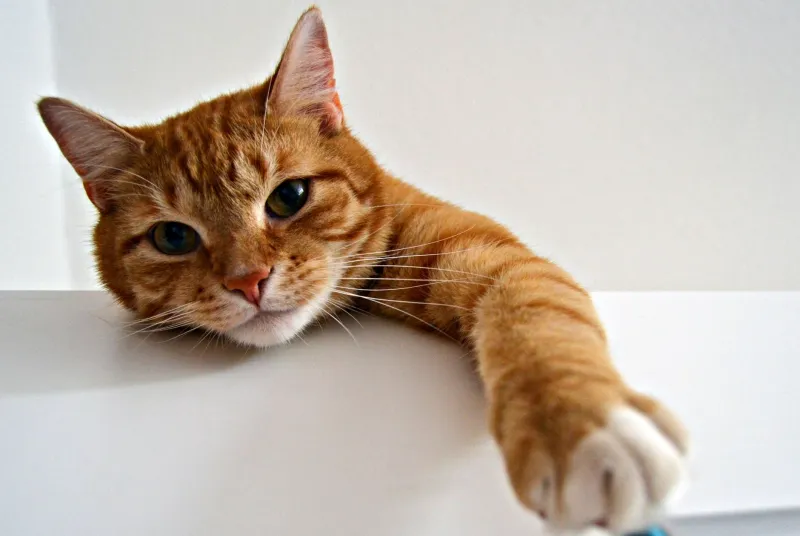
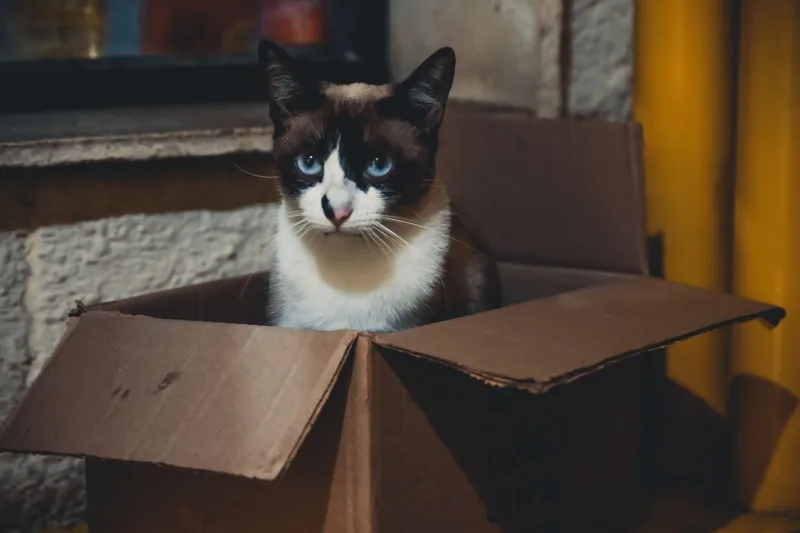
Gravity Is Just a Theory: The Surprisingly Brilliant Reason Your Cat Pushes Everything Off the Counter
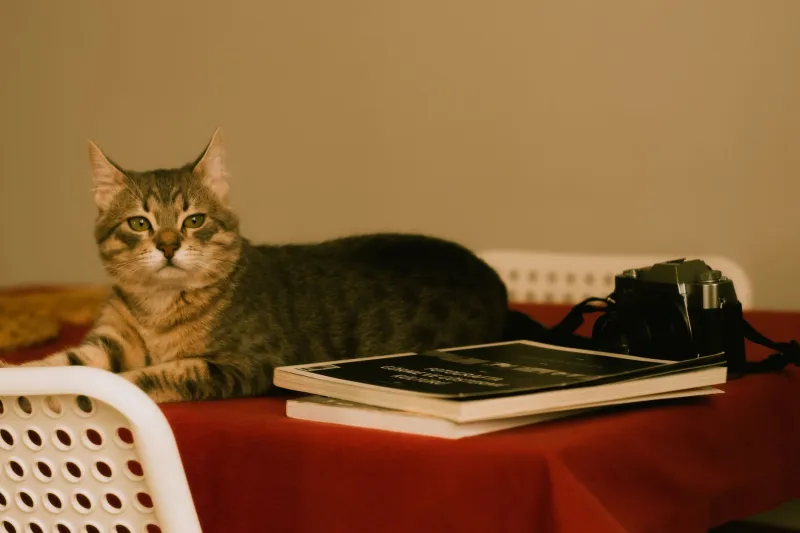
It happens in slow motion. Your cat makes deliberate, unbroken eye contact with you, extends one velvet paw, and sends your phone — your good phone — tumbling off the nightstand with the casual confidence of someone who has never once paid a phone bill. Then it walks away.
You've probably filed this behavior under "cats are chaotic little gremlins," and honestly, who could blame you? But as it turns out, the truth behind this infuriating habit is far more fascinating than pure spite. Your cat is not broken. It is, in fact, operating at a surprisingly high cognitive level. Which is somehow both reassuring and more annoying.
The Hunter That Never Clocked Out
Here's the thing about domestic cats that tends to get lost somewhere between the Instagram reels and the novelty food bowls: they are apex predators wearing a very convincing "lap pet" costume. Every instinct your cat carries was forged over thousands of years of hunting small, fast, unpredictable prey. And those instincts don't just turn off because you switched them to an indoor lifestyle and started buying them themed holiday sweaters.
When a cat bats at an object on a table, it's essentially running a prey assessment. The paw tap — often repeated, methodical, and disturbingly focused — is the same motion a cat uses to test whether a mouse is actually dead or just playing dead (a very real rodent survival strategy, for the record). By nudging an object and watching how it moves, your cat is gathering data: Is this thing alive? Is it a threat? Is it edible? Will it run if I smack it harder?
Your water glass fails all of these tests spectacularly and still gets launched off the counter. Because at that point, the investigation has concluded and the hunt must proceed.
Physics Class, Feline Edition
Beyond raw predatory instinct, there's a cognitive play element happening that researchers find genuinely compelling. Cats are deeply curious about cause and effect — a trait that, in the wild, helps them understand their environment well enough to survive in it. Knocking objects off elevated surfaces is, in a very real sense, your cat conducting physics experiments.
Watch closely next time it happens (assuming you can resist the urge to intervene). Many cats will nudge an object incrementally, pause, observe the result, then nudge again with slightly more force. They're not just swatting randomly — they're calibrating. Different objects behave differently. A pen rolls. A chapstick skids. A full glass of water creates a deeply satisfying catastrophe. Each outcome is new information.
This kind of object manipulation play is associated with higher cognitive function in animals. It requires sustained attention, predictive modeling ("if I push this harder, it will move farther"), and an ability to learn from repeated outcomes. Your cat is basically running a very destructive STEM curriculum on your kitchen counter every morning.
The Attention Economy of Cat Ownership
Okay, but let's be honest about one more layer here, because cats are nothing if not multi-motivated: sometimes they absolutely know what they're doing, and they're doing it for you.
Cats are observant to a degree that should probably unsettle us more than it does. They notice patterns. They notice that when they knock something over, a large, slow-moving human suddenly materializes from another room, makes loud vocalizations, and engages directly with the cat — even if that engagement is frantic and slightly furious. From a cat's perspective, that's a result. That's interaction. That's the big weird creature finally paying attention.
Behavioral researchers have noted that cats will repeat actions that generate a predictable response from their owners, even negative ones. If every time your cat shoves your keys off the entryway table you come running, your cat has successfully trained you to come running. The student has become the teacher. The teacher is now crying over a cracked phone screen.
Territorial Logic and the High Ground
There's also a territorial dimension worth considering. Cats are intensely motivated to control their environment, and elevated surfaces — countertops, shelves, the top of the refrigerator where you thought your stuff was safe — represent prime real estate in a cat's spatial hierarchy. Clearing objects off these surfaces isn't random destruction. It's redecorating.
In feline logic, a surface cluttered with human objects is a surface that isn't fully available to the cat. By systematically removing your stuff, your cat is asserting ownership of that space. This is the same impulse that drives cats to sit directly on whatever you're currently reading, sleep in the exact center of a freshly made bed, and position themselves in front of the TV at the precise moment something interesting is happening. The space is theirs. Your belongings are just obstacles.
What You Can (Realistically) Do About It
Armed with this knowledge, a few practical approaches actually make sense.
First, enrichment. A cat that has adequate outlets for its hunting instincts — puzzle feeders, interactive wand toys, window perches with interesting views — has less surplus predatory energy to redirect toward your belongings. A bored cat is an experimental cat.
Second, designated high surfaces. Giving your cat its own elevated space, like a cat tree or a cleared shelf, satisfies the territorial drive without sacrificing your entire countertop to the cause.
Third — and this one requires genuine willpower — try not to react dramatically. If your cat has learned that knocking things over summons you instantly, a muted response (or no response at all) can gradually reduce the behavior's appeal. This is much easier said than done when it's 2 a.m. and your cat just sent a ceramic mug into the void.
The Grudging Respect You Owe Your Cat
Here's where we land: your cat's counter-clearing habit is annoying, yes. Occasionally expensive, definitely. But it's also a window into a genuinely complex behavioral profile — one that combines ancestral hunting instinct, active environmental learning, social manipulation, and spatial reasoning into one devastatingly casual paw swipe.
Your cat isn't knocking things over because it's broken or malicious or running some kind of long con (probably). It's doing what its brain was built to do: investigate, interact, and assert itself in a world it's constantly trying to understand.
The least you can do is move your good coffee mug to a lower shelf.
Or accept your fate. Either works.