Puddle Cat: The Freaky Feline Anatomy That Turns Your Pet Into a Furry Shapeshifter
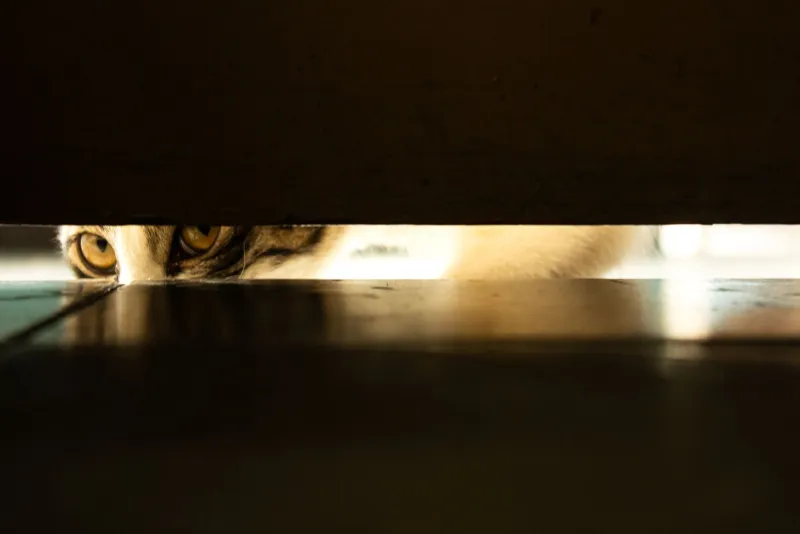
It starts innocently enough. You're minding your own business, maybe folding laundry or watching TV, when you glance over and notice your 12-pound tabby has somehow wedged himself into a mason jar. Not literally — but almost. He's crammed into the six-inch gap between the washing machine and the wall, looking supremely comfortable and mildly smug about the whole situation. You blink. You question your grip on reality. You Google "is my cat made of liquid."
Good news: you are not losing your mind. Your cat is simply operating on a completely different set of physical rules than the rest of us, and the science behind it is genuinely wild.
The Skeleton That Refuses to Play by the Rules
Here's the core of the mystery: cats do not have a rigid collarbone. In humans, the clavicle acts like a crossbar connecting the shoulders to the sternum, which is great for throwing a baseball but terrible for squeezing through a dryer vent. Cats, on the other hand, have a clavicle that's essentially free-floating — a tiny, vestigial bone that's barely tethered to anything structural. It just kind of... hangs out.
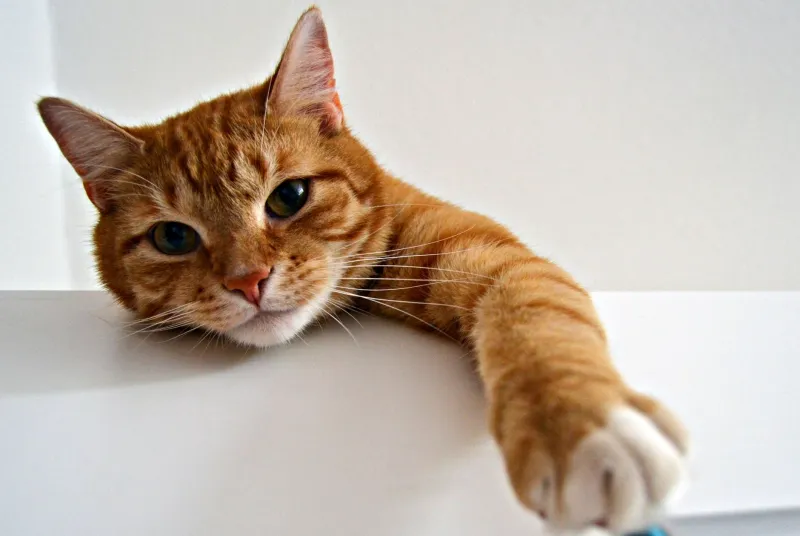
What this means in practice is that a cat's front shoulders can rotate inward and compress in ways that would send a human straight to the orthopedic surgeon. The front legs essentially work like independent suspension systems, allowing the whole front half of the body to narrow dramatically. If a cat can fit its head through an opening, there's a very good chance the rest of it can follow — because the head, particularly the skull, is the widest rigid structure in the whole animal.
So yes, the internet meme is technically correct: if the head fits, the cat fits. This is not an exaggeration. This is anatomy.
A Spine That Basically Has No Chill
While the collarbone situation is doing a lot of heavy lifting in the flexibility department, the spine deserves its own standing ovation. A cat's vertebral column contains more elastic cushioning between the discs than a human spine does, and the vertebrae themselves have a greater range of rotational motion. This is why cats can twist into that iconic Halloween-cat arch, why they can rotate their hindquarters nearly independently of their shoulders, and why they can contort into positions that would make a yoga instructor weep with envy.
The muscles wrapped around all of this are also unusually elastic and densely packed relative to the cat's body size. Think of it less like a rigid frame and more like a very sophisticated sock full of springs. When a cat compresses itself into a tight space, it's not forcing its body to do something unnatural — it's just defaulting to a mode of operation that's baked into the design.
But Why, Though?
Evolution doesn't hand out party tricks for free. There's a real reason cats are built like furry accordions, and it traces back to their history as both predators and prey.
As hunters, the ability to compress through narrow spaces — the gap under a fence, the hollow of a log, the crack between two boulders — meant access to prey that larger, less flexible predators couldn't reach. Small rodents and birds take refuge in tight spots, and a cat that can follow them in has a significant competitive advantage.
On the flip side, smaller wild cats are also on the menu for larger predators. Being able to disappear into a crevice that a coyote or a hawk can't navigate is an excellent survival strategy. Basically, feline flexibility is a Swiss Army knife of evolutionary utility, which explains why your thoroughly domesticated apartment cat — who has never once needed to escape a hawk — still treats every cardboard box as a personal challenge.
The Greatest Hits of Cats Defying Spatial Logic
If you've spent any time on the internet — and statistically, you have — you've seen the photographic evidence. Cats stuffed into flower pots. Cats draped across the inside of a glass bowl like a furry puddle. Cats somehow inside a closed cabinet that you definitely shut before you left for work. The viral videos are endless, and they all share one quality: the cat in question looks completely unbothered, as if wedging oneself between a refrigerator and a cabinet is just a totally normal Tuesday.
Some real-world examples that cat owners across America have reported with a mixture of awe and mild horror:
- A cat that regularly squeezes under a door with a gap of less than two inches, flat as a throw rug, and emerges on the other side looking no worse for the experience.
- A cat discovered inside a kitchen cabinet through a gap that was, by all reasonable measurements, too small for a can of soup.
- A cat that somehow got into a running clothes dryer through the lint vent opening. (The cat was fine. The owner needed a moment.)
These aren't flukes. These are demonstrations of a finely tuned biological system doing exactly what it was built to do.
What This Means for You, the Cat Owner
If your cat's Houdini tendencies are giving you anxiety, you're not alone. Here are a few practical things worth knowing:
Escape-proofing is genuinely hard. Because cats can compress so effectively, standard baby gates and pet barriers often don't cut it. If you need to keep your cat out of a specific area, you'll need barriers with openings smaller than your cat's head — which, for most adult cats, means gaps of less than three to four inches.
Gaps under fences are a real concern. Outdoor cats can squeeze under fencing that looks totally secure to human eyes. If you're trying to cat-proof a yard, dig-guard barriers and fencing that curves inward at the top are more reliable than height alone.
Tight spaces aren't usually dangerous — until they are. Cats generally know their limits and won't compress into something they can't get out of. Usually. Occasionally, however, a cat will get stuck — particularly in spots where they can get in but can't generate enough leverage to back out. If your cat is stuck and can't wiggle free, don't yank. Call your vet for guidance.
The head-fits-the-body-fits rule has limits. Kittens are even more flexible than adults, and a kitten that can slip through a gap today may get stuck in the same gap in two months after a growth spurt. Keep an eye on escape routes as your kitten grows.
Embrace the Chaos
At the end of the day, your cat's uncanny ability to turn into a liquid and reappear inside a shoebox is one of the more delightful perks of sharing your home with a small, opinionated predator. It's a little terrifying, occasionally inconvenient, and genuinely impressive from a biological standpoint.
The next time you find your cat occupying a space that should be physically impossible, take a second to appreciate what you're witnessing: millions of years of evolutionary engineering, compressed into a furry loaf wedged behind your bathroom radiator, purring contentedly.
Nature is incredible. Cats are weird. These two facts are not unrelated.