Chemical Warfare, Feline Edition: The Nepetalactone Prank Your Cat Falls For Every Time
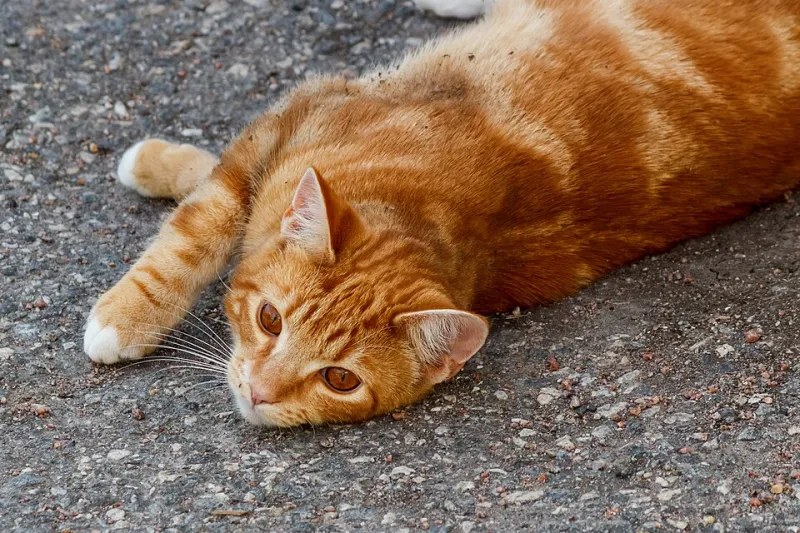
Photo: W.carter, CC BY 4.0, via Wikimedia Commons
It Starts With a Sniff and Ends With a Rug Burn
There is a specific sound a cat makes when catnip hits the olfactory system. It is not quite a meow. It is a low, rattling acknowledgment that something in the brain has just clocked out for the afternoon. Within seconds, a creature that spends nine hours a day maintaining an image of remote aristocratic dignity is dragging its cheek across the carpet, chewing a cardboard box, and kicking itself in the head like a malfunctioning Roomba.
The internet calls it a catnip high. Chemists call it a highly predictable response to a volatile iridoid. Your cat calls it Tuesday.
But here is the part that rarely makes the meme: the molecule responsible did not evolve for cats at all.
Meet Nepetalactone, the Molecule With a Day Job
Nepetalactone is the star compound in Nepeta cataria — the plant we know as catnip, a mint-family weed that grows enthusiastically in American backyards, roadside ditches, and any garden bed you specifically designated for something else.
In the plant, nepetalactone is a defense contractor. It repels aphids, discourages insects from settling in, and smells aggressively herbal to anything with a nose. It is, in the plainest possible terms, mace.
It also happens to fit into receptors in a cat's olfactory epithelium like a key in an extremely unserious lock. That is the tissue lining the back of the nasal cavity — not the vomeronasal organ, which is the structure behind the flehmen response. For years people confidently blamed the vomeronasal organ. Modern work points at the main olfactory system instead, which ruins a lot of otherwise excellent trivia.
What follows is a behavioral cascade: sniffing, licking, head-rubbing, chin-dragging, rolling, bunny-kicking, and the occasional unprovable claim of levitation. It lasts roughly five to fifteen minutes, then stops cold. Your cat does not come down from it so much as lose interest in it entirely.
The Plant Is Not Trying to Entertain Anyone
This is where the conspiracy falls apart. Catnip is not a gift from nature to bored housecats. Research has shown nepetalactone repels mosquitoes and other biting insects with real efficiency — in some lab tests, more effectively than the stuff in your bug spray.
The plant is not throwing a party. The plant is defending itself. Cats have simply wandered into the crossfire of an ancient chemical argument between a weed and an aphid and decided the collateral damage felt fantastic.
Which raises an obvious question: if this compound is a pesticide, why does it feel good? Honest answer: nobody fully knows. The leading hypothesis is that nepetalactone mimics a feline pheromone closely enough to trip the same neural circuitry, producing a kind of sensory false positive. There is also some evidence that rubbing against the plant transfers the compound onto the fur, which would turn an outdoor cat into an ambulatory bug repellent. That is either brilliant or deeply undignified, depending on your cat.
Roughly a Third of Cats Never Get the Joke
Here is the statistic that starts arguments at every dog park in America: somewhere around 30 percent of domestic cats show no reaction to catnip whatsoever. Not a twitch. Not a polite sniff. They walk past a fresh pile like it is oregano, which, technically, it is.
The non-response is inherited. The trait appears strongly heritable and runs along dominant lines, so two enthusiastic rollers are more likely to produce kittens that also lose their minds, while two indifferent cats tend to produce kittens that regard your catnip purchase as a personal insult to their intelligence.
Age matters too. Kittens under roughly six to eight weeks generally ignore catnip, and the response tends to emerge between three and six months as the olfactory system matures. Plenty of seniors who once went full goblin mellow into dignified sniffing. Their noses still work. Their enthusiasm filed for retirement.
Big Cats, Same Weird Trip
Catnip is not a housecat quirk. Lions, leopards, jaguars, and cougars respond — often spectacularly, which is a fine reason to be grateful your cat weighs eleven pounds.
Tigers are the interesting exception. Observations suggest tigers largely shrug at catnip, which has fueled speculation about differences in the relevant receptor genes. Treat that as a strong hint rather than settled law. It is the kind of fact that gets repeated on zoo tours with more confidence than the science strictly supports.
The Fifteen-Minute Reset Button
If your cat rolls, snorts, and then abruptly abandons the scene like the party got boring, that is a feature, not a glitch. Repeated exposure produces a refractory period — somewhere between thirty minutes and an hour where catnip simply stops working. The receptors stop taking the call.
This is why dumping a pound of catnip into a toy and leaving it there forever is money set on fire. It is also why the toy that drove your cat wild in March may produce nothing but a yawn in April. Novelty is the entire currency here.
When Catnip Is Not Enough: Silver Vine and the Understudies
If your cat is in the stubborn third, do not give up on the whole genre. Silver vine — often sold as matatabi — contains nepetalactol and actinidine, and studies suggest a much higher percentage of cats respond to it than to catnip. Valerian root and Tatarian honeysuckle round out the undercard, and a cat that ignores catnip may go absolutely feral for honeysuckle.
Read the label, though. A remarkable number of catnip-alternative toys are sawdust and marketing.
So What Does Safe Catnip Play Actually Look Like?
The good news first: catnip is not addictive, not toxic, and not a sedative you need to meter out like medication. There is no feline rehab, no withdrawal, no intervention.
A few sensible habits still go a long way:
- Keep sessions short. Ten to fifteen minutes, then put it away. It gives the novelty somewhere to come back to.
- Apply it to objects, not the carpet. A pinch rubbed into a cardboard scratcher, a sisal post, or a soft toy creates a target. Loose powder on the floor just confuses the vacuum.
- Skip the kittens. Under three months, most cats will not care. There is no benefit and no reason.
- Watch the group dynamic. Some cats get pushy on catnip. In a multi-cat home, run the first few sessions separately and see who turns into a jerk.
- Store it sealed. Nepetalactone is volatile. A bag left open in a humid kitchen becomes expensive oregano by August.
- Do not use it to bribe a nervous cat into a carrier. A rolling, disinhibited cat is harder to load into a plastic box than a calm one. Save the party for after the vet.
One caveat worth knowing: eating large quantities can cause mild stomach upset. Your cat will be fine. Your rug will not, which is a punishment that lands on the wrong party.
The Real Takeaway
Catnip is a prank with a punchline millions of years in the making. A plant built a chemical weapon, and your cat decided it was the greatest thing since sunbeams. Those five minutes of chaos are not a personality flaw or evidence of a secret feral streak. They are a genetic coin flip meeting a very specific molecule.
So buy the good stuff, keep it in a jar, and enjoy the show. Just do not expect the neighbor's cat to be impressed. That one is in the 30 percent, and it knows it is better than you.