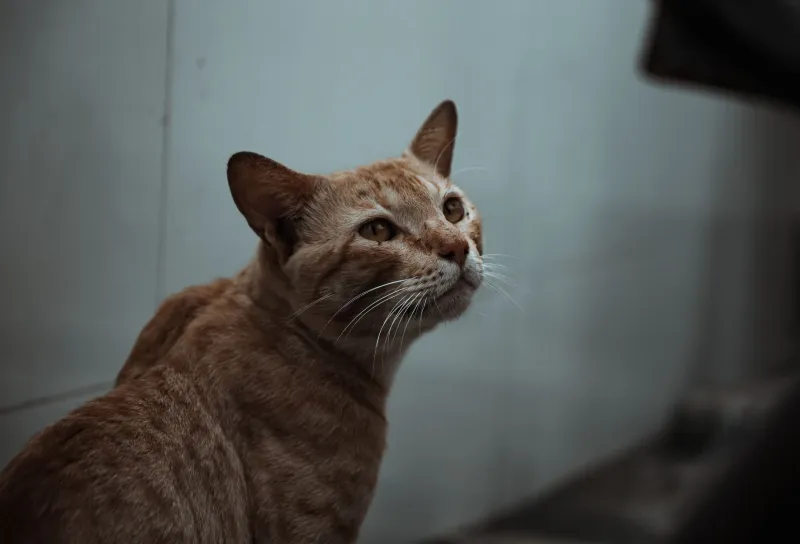
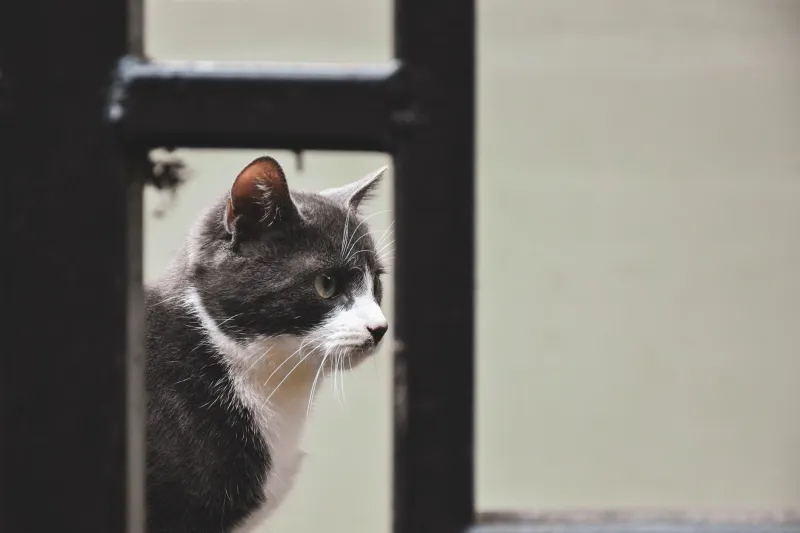
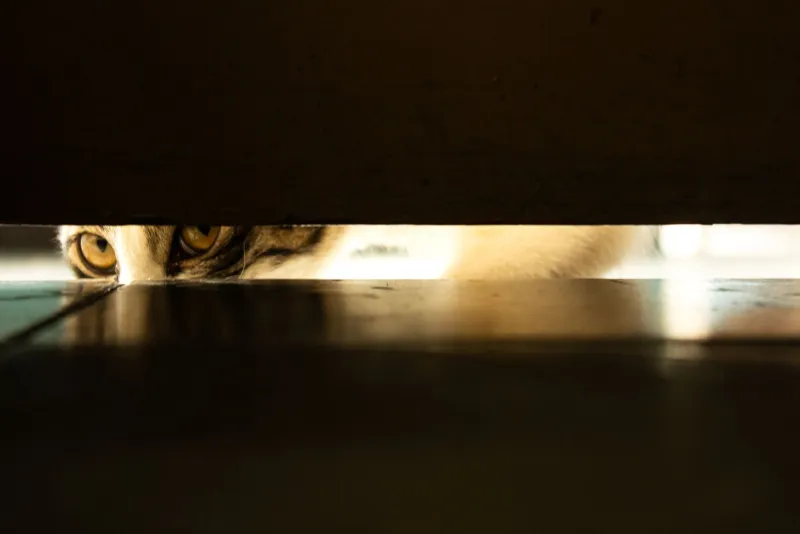
Gone in Sixty Seconds: The Covert Life Your Indoor Cat Is Living Behind Your Back
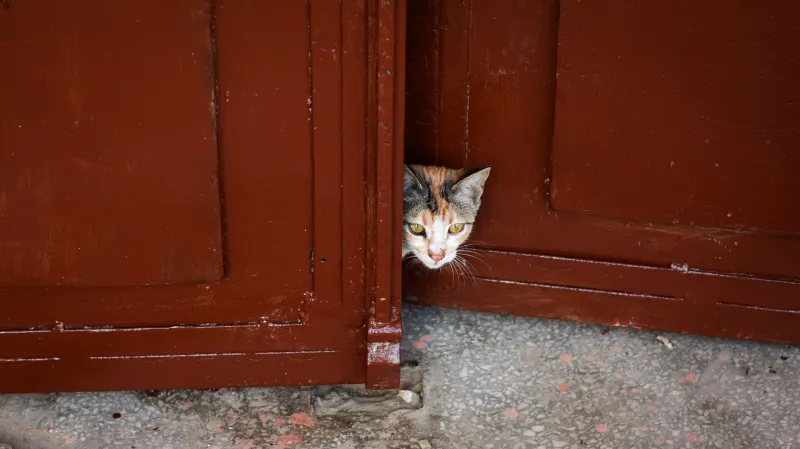
You blink. You answer one text. You hold the front door open for approximately three seconds while hauling in groceries, and suddenly your cat — the same cat who spent the last four hours in a comatose heap on the sectional — is gone. Vanished. Not hiding under the bed gone. Actually gone. Out the door, into the wild, living her best mysterious life while you stand on the porch in your socks calling her name like a confused shepherd.
Hours later, she strolls back in without a scratch, without an explanation, and without even the decency to look guilty. She blinks at you, licks a paw, and returns to the couch as if nothing happened.
So what exactly is going on out there? Buckle up, because the answer is equal parts fascinating and slightly humbling.
The Escape Artist's Toolkit
First, let's appreciate the sheer audacity of the operation. Your cat has identified every weak point in your home's perimeter with the methodical precision of a heist planner. That three-second gap when you're wrestling a paper bag through the door? Catalogued. The slightly warped window screen in the guest room? Noted. The moment you get distracted by a phone call near the back door? Scheduled.
Cats are opportunistic hunters by evolutionary design, and that same hard-wired instinct to spot and exploit a gap in the environment — whether it's a gap in a fence or a gap in your attention — is exactly what sends them bolting for the exit. It's not personal. It's not a statement about your housekeeping. It's just deeply, irreversibly baked into who they are.
Indoor cats also have genuinely sharp spatial memory. Research has shown that cats build detailed mental maps of their environments, which means your indoor-only cat almost certainly has a working blueprint of your neighborhood even if she's only glimpsed it through a window. She's been planning this trip for months.
What Your Cat Is Actually Doing Out There
GPS tracking studies — yes, researchers have absolutely strapped little trackers onto cats and followed their adventures — have produced some wildly entertaining data. A 2022 study out of North Carolina State University tracked dozens of owned outdoor and indoor-outdoor cats and found that most of them weren't exactly living the extreme life their owners imagined.
The average owned cat with outdoor access tends to stay within a relatively modest range of home — often just a few hundred yards. They're not out there hitchhiking to the next county. They're sniffing fence posts. They're sitting under a shrub watching a sparrow with the intensity of someone watching the final episode of a prestige drama. They're investigating that suspicious smell near the neighbor's recycling bins. They're, in all likelihood, doing a lot of sitting and staring at things.
That said, unneutered males are a different story entirely, sometimes ranging over several miles in a single outing. If your intact male cat escapes and doesn't come back for a suspiciously long time, he's on a very different kind of adventure. Get him neutered. For everyone's sake.
The Real Reason a Comfortable Cat Still Wants Out
Here's the part that stings a little for devoted cat parents: your cat's desire to escape isn't a referendum on the quality of her indoor life. You could build her a floor-to-ceiling cat tree, rotate her toy collection weekly, and install a bird-watching window perch with a heated cushion, and she would still occasionally bolt for the door if given the chance.
Why? Because the drive to explore isn't about dissatisfaction — it's about stimulation. Cats are sensory creatures, and the outdoors is basically a five-alarm buffet of smells, sounds, textures, and moving things. The air outside carries thousands of scent signals that don't exist inside your climate-controlled home. Every blade of grass, every passing dog, every squirrel that ran through the yard three days ago has left a chemical message your cat's nose can decode like a newspaper.
Indoor environments, no matter how lovingly curated, are sensory-stable in a way that the outside world simply isn't. For a predator species, that stability can translate to a kind of low-grade restlessness — not misery, just a persistent itch for novelty that the outdoors scratches immediately and completely.
Behavioral scientists call this "environmental enrichment seeking," which is a polished way of saying your cat is bored of smelling the same twelve things every day.
The Part Where We Talk About Risk (Without Ruining the Fun)
Here's the less charming side of all this wanderlust: the outdoors is genuinely dangerous for domestic cats. The American Veterinary Medical Association and pretty much every major animal welfare organization in the US will tell you that outdoor cats face real risks — cars, predators (coyotes are a legitimate concern in suburban and even urban areas across most of the country), disease, and the occasional territorial dispute with another cat that ends in an expensive vet visit.
The average lifespan of a strictly indoor cat is significantly longer than that of an outdoor or indoor-outdoor cat. That's not a scare tactic. That's just math.
None of which means your cat's desire to explore is something to shame or suppress — it just means that the goal is to satisfy that itch safely rather than simply locking it away.
Keeping Your Escape Artist Entertained Without Letting Her Out
The good news is that behavioral science has produced some genuinely effective strategies for channeling your cat's outdoor longing into safer outlets.
Catios and leash training. Yes, leash-walking cats is a real thing, and yes, it looks exactly as chaotic as you're imagining. But many cats adapt to harness walks with patience and positive reinforcement, and a well-constructed catio — an enclosed outdoor patio designed specifically for cats — gives your escape artist fresh air, real smells, and the ability to watch actual birds without the associated mortality risk.
Window enrichment. A window perch positioned near a bird feeder is basically Netflix for cats. Add a squirrel feeder to the mix and you've got premium cable.
Rotating novelty indoors. New smells are genuinely powerful enrichment tools. Rotating toys, introducing cat-safe herbs like valerian or silver vine, or even bringing in a stick from the yard can give an indoor cat a meaningful sensory hit without a single door being opened.
Door management. If your cat is a dedicated door-dasher, consider installing an airlock-style entryway — two doors that can't both be open at the same time — or training a reliable "sit" and "stay" at the threshold. It takes time, but cats are more trainable than their reputation suggests, especially when high-value treats are involved.
The Grudging Respect You Owe Your Cat
At the end of the day, there's something undeniably impressive about a creature that can live in the lap of luxury — heated beds, scheduled meals, a full-time human staff — and still maintain the self-sufficient, calculating wanderlust of a wild animal. Your cat hasn't been domesticated out of her instincts. She's just agreed, provisionally, to live with you.
The door is always a negotiation. And she's a better negotiator than you are.
So maybe invest in that airlock.