Your Cat's Whiskers Are Basically a Built-In Supercomputer (And They Know It)
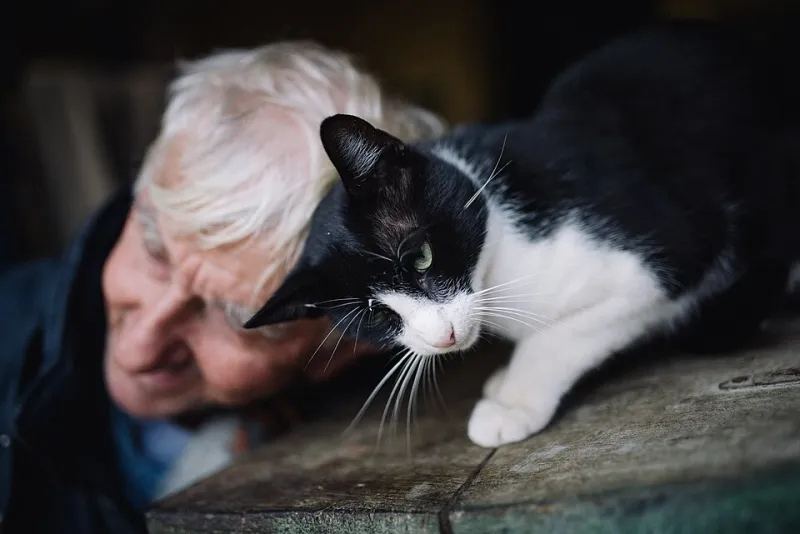
Photo: Shixart1985, CC BY 2.0, via Wikimedia Commons
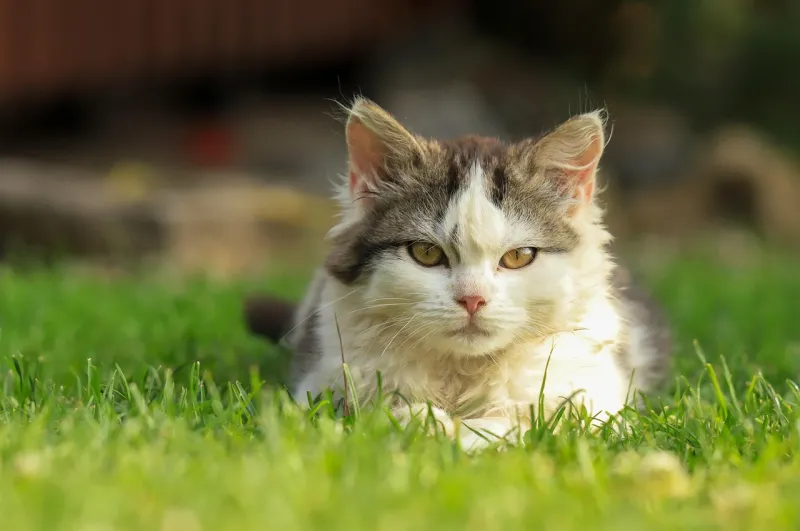
You've probably noticed that your cat carries themselves with a particular air of confident authority. Head high, gaze steady, whiskers fanned out like they're receiving transmissions from a dimension you don't have clearance for. Here's the thing: they kind of are. Those long, dramatic facial hairs aren't decorative. They're not a fashion statement, though cats would absolutely claim otherwise. They are, in biological terms, one of the most sophisticated sensory instruments found anywhere in the animal kingdom — and understanding how they work will permanently change the way you look at your cat's face.
Welcome to the whisker rabbit hole. It goes deep.
These Are Not Just Fancy Hairs
First, a terminology note, because cats deserve the proper vocabulary: whiskers are technically called vibrissae, from the Latin vibrio, meaning "to vibrate." That name is doing a lot of work, and it's entirely accurate.
Unlike the regular fur covering the rest of your cat's body, vibrissae are rooted roughly three times deeper in the skin, embedded in a dense network of nerve endings and blood-filled follicles called proprioceptors. These follicles are so sensitive they can detect changes in air pressure — not just objects that the whisker physically touches, but the subtle disturbances in airflow caused by nearby objects, moving prey, or even changes in ambient environment. Your cat is essentially running continuous atmospheric radar from their face.
The average cat has around 24 whiskers arranged in four horizontal rows on each side of their muzzle, though that number varies slightly between individuals. And those cheek whiskers? They're just the headline act. Cats also have vibrissae above their eyes (think of them as biological eyebrow guards), on their chin, and — this one surprises most people — on the backs of their front legs, just above the paws. That last location turns out to be extremely relevant to hunting, which we'll get to shortly.
The GPS That Fits on Your Cat's Face
One of the most famous functions of whiskers is spatial measurement, and it works exactly as elegantly as it sounds. A cat's whisker span roughly corresponds to the width of their body. This means that when a cat sticks their head into a gap — behind the dryer, inside a paper bag, into whatever forbidden cabinet they've decided requires investigation — they're using their whiskers to pre-calculate whether the rest of them will fit.
This is why cats seem to make almost no errors in spatial judgment. They're not guessing. They're measuring. The whiskers hit the edges, the nerve signals travel to the brain, the brain runs the calculation, and the cat either proceeds or retreats with the calm confidence of someone who has already done the math. It's less "let me try" and more "I have assessed this situation and it checks out."
This system also explains a phenomenon cat owners sometimes notice called whisker fatigue or whisker stress. If a cat's food or water bowl is too narrow, the whiskers repeatedly brush the sides during eating and drinking, sending a constant stream of sensory signals to the brain that adds up to genuine discomfort. Some cats will stop eating from a bowl mid-meal and paw food out onto the floor instead — not because they're being dramatic (well, not only because they're being dramatic), but because the bowl is essentially overstimulating their face. Wide, shallow dishes aren't a luxury. They're ergonomics.
The World's Most Sophisticated Hunting Tool
Here's where the leg whiskers come back into the picture. When a cat catches prey, there's a brief, critical moment where the animal is in the cat's mouth and the cat needs to make a fast, precise decision: where exactly is the prey's neck, and what angle is required for a killing bite? In low light — which is when cats do most of their serious hunting — visual information alone isn't fast or accurate enough.
Enter the carpal whiskers on the front legs. As the cat's paws hold the prey, those leg vibrissae detect the animal's exact position, size, and movement, feeding real-time data directly to the brain. The muzzle whiskers simultaneously gather information about what's in the mouth. The cat then delivers a bite calibrated to that specific target, with a precision that no amount of eyesight alone could achieve in the dark.
Your housecat, who has never hunted anything more dangerous than a hair tie, is walking around with this entire system fully operational at all times. That feather toy doesn't stand a chance for reasons that are genuinely impressive from an engineering standpoint.
Whiskers as an Emotional Dashboard
Beyond navigation and hunting, whiskers serve as a surprisingly readable emotional display — if you know what you're looking at.
A relaxed, content cat carries their whiskers in a neutral position, fanned gently to the sides. A curious or alert cat pushes their whiskers forward, essentially pointing them toward whatever has captured their attention, maximizing the sensory surface area aimed at the target. An anxious, frightened, or defensive cat pulls their whiskers flat against the face — reducing their sensory footprint and protecting them during a potential confrontation.
This means that the next time your cat approaches something new and their whiskers visibly fan forward like tiny antennae, they're not just looking cute. They're actively scanning. The whiskers are gathering data, and your cat is processing it in real time. You are watching a biological sensor array in operation. Appreciate the moment accordingly.
The One Thing You Should Never, Ever Do
Given everything whiskers do, it should come as no surprise that trimming them is a genuinely terrible idea. And yet, it happens — sometimes by well-meaning owners who think they're tidying things up, occasionally by children with scissors and curiosity, and sometimes in grooming mishaps.
Cutting a cat's whiskers doesn't cause immediate physical pain, since the hair shaft itself has no nerve endings. But the effect on the cat is significant. Disoriented movement, difficulty judging distances, increased anxiety, hesitancy in spaces they'd normally navigate with ease — the sensory deprivation is real and measurable. The good news is that whiskers grow back. The bad news is that it takes several months, during which your cat is essentially operating with a critical piece of their biological infrastructure offline.
Leave the whiskers alone. They are not yours to manage. They belong to the supercomputer, and the supercomputer has a long memory.
A New Way to See That Familiar Face
The next time your cat sits across from you, whiskers fanned wide, regarding you with that particular expression that lands somewhere between wisdom and mild contempt, take a moment to appreciate what you're actually looking at. That face is running continuous environmental scans. It's measuring space, detecting air currents, reading emotional temperature, and processing sensory data at a speed and resolution that human technology is still working to replicate.
Your cat isn't just sitting there. They're computing. And they've known it all along.