Mousers to Memes: The Wild, Whisker-Filled Ride of How Cats Took Over America

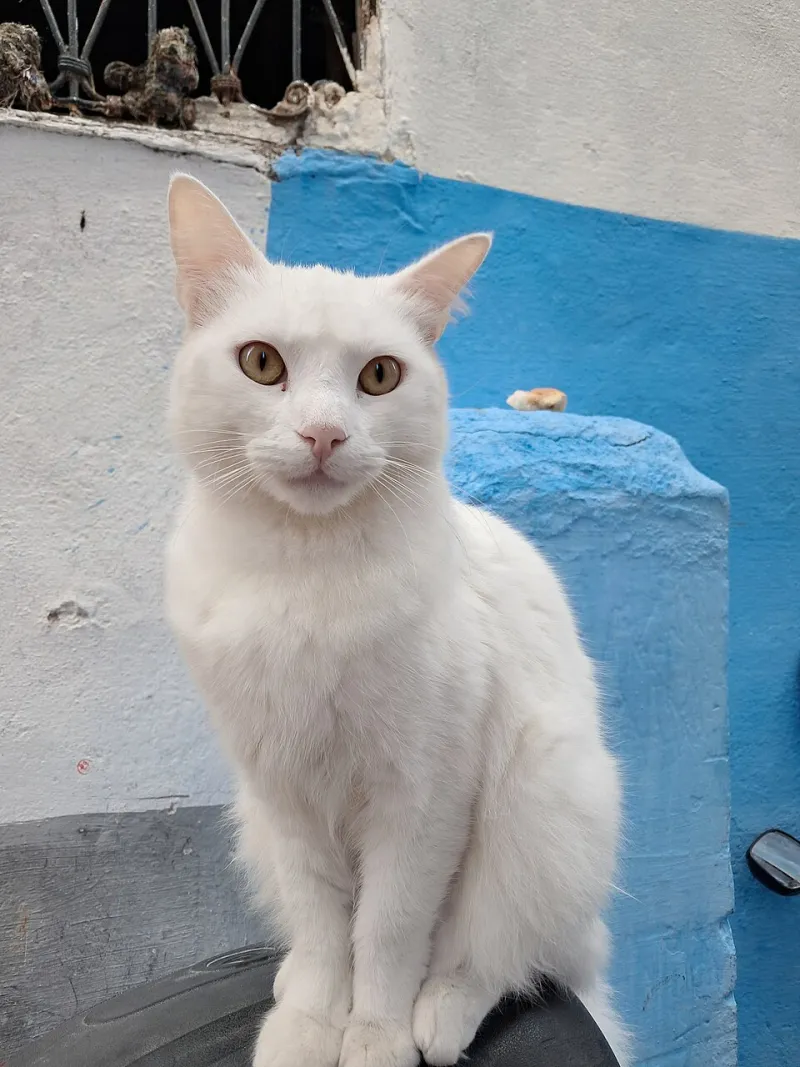
Photo: Jisihod121, CC0, via Wikimedia Commons
Somewhere in America right now, a cat named Biscuit is wearing a tiny birthday hat, being photographed on an iPhone, and is about to become someone's Instagram Reel. Biscuit has no idea that his ancestors were clinging to the rigging of wooden sailing ships, hunting rats in the grain stores of colonial settlements, and earning their place in the New World entirely on the merits of their pest-control skills.
The journey from working ship cat to TikTok royalty is a long one, and it is absolutely worth telling.
The Puritans Brought Cats. The Cats Brought Chaos (The Good Kind).
Cats didn't exactly swim to the Americas on their own. They arrived the same way most things did in the 1600s and 1700s: aboard European ships, where they were considered essential crew members. Rodents were a serious threat to the food supplies that kept sailors alive on months-long ocean crossings, and cats were the most efficient solution anyone had come up with. They weren't pets — they were employees.
Once those ships landed in colonial America, the cats came with them. They spread quickly across settlements, working farms, granaries, and warehouses from Massachusetts to Virginia. Early American colonists had a deeply practical relationship with their cats: you hunt mice, we feed you, we don't ask too many questions. It was a business arrangement that worked beautifully for both parties.
Farm cats multiplied, spread westward with the frontier, and became fixtures of American rural life throughout the 18th and 19th centuries. Nobody was writing poems about them yet. Nobody was making them wear tiny cowboy hats. They had jobs, and they did them.
The Victorian Era: When Cats Got a Promotion
Something started to shift in the late 1800s. As American cities grew and the middle class expanded, the idea of keeping animals purely for companionship — rather than utility — became increasingly fashionable. Dogs had been pets for a while, but cats began their slow, inevitable climb up the social ladder during the Victorian era, when cat shows first appeared in the United States.
The first major American cat show was held at Madison Square Garden in 1895, organized by the American Cat Club. People brought their finest felines, argued passionately about coat quality, and generally behaved in ways that would be completely recognizable to anyone who's been on a cat subreddit in the last decade. The cats, for their part, were probably deeply unimpressed.
By the early 20th century, cats were increasingly common as household companions, particularly among women living in cities. They were quieter than dogs, lower maintenance, and fit comfortably into apartment living — a practical choice that would only become more relevant as American cities densified throughout the 20th century.
The Mid-Century Slump: Dogs Get the Glory, Cats Get the Stereotype
Here's where the story takes a slight detour. For much of the mid-20th century, American popular culture was pretty firmly Team Dog. Lassie debuted in 1943. Rin Tin Tin was a bonafide Hollywood star. Dogs appeared in advertisements, movies, and television as loyal, enthusiastic, all-American companions. Cats, meanwhile, were frequently cast as the sidekick of witches, the pet of villains, or the punchline of cartoons.
The "cats are aloof and unloving" myth really calcified during this era, and it stuck around longer than it had any right to. But cats were still in millions of American homes, quietly doing their thing, completely unbothered by their reputation.
The Internet Changes Everything (Specifically, Everything About Cats)
And then came the internet, and with it, the single greatest turning point in the history of American cat culture.
It started small — grainy early-2000s videos of cats doing bizarre things, passed around via email and early forums. Then YouTube launched in 2005, and the floodgates opened. "Keyboard Cat." "Nyan Cat." "Surprised Kitty." Henri, le Chat Noir, a philosophical French cat who narrated his own existential despair in subtitles and somehow had millions of fans. By the early 2010s, it was estimated that cat videos accounted for a significant chunk of all internet traffic, and researchers at Indiana University actually studied why — concluding that watching cat videos genuinely boosted viewers' moods and energy levels.
Then came Grumpy Cat — real name Tardar Sauce — whose perpetual scowl launched a merchandise empire, a Lifetime movie, and a reported net worth of $100 million before her passing in 2019. A cat. Worth $100 million. The colonial ship cats who hunted rats for a handful of dried fish would be absolutely baffled.
TikTok has only accelerated the phenomenon. As of the mid-2020s, cat content consistently ranks among the most-viewed categories on the platform, with individual cats amassing follower counts that rival mid-tier celebrities.
Cat Cafes, Emotional Support Animals, and the New American Cat
The cultural shift wasn't just happening online. On the ground, American attitudes toward cats were transforming in measurable, physical ways.
Cat cafes — a concept imported from Japan via Taiwan, where the first opened in 1998 — began appearing in American cities around 2014. The first U.S. cat cafe, KitTea, opened in San Francisco. Within a few years, they had popped up in New York, Chicago, Austin, Seattle, and dozens of other cities, typically operating in partnership with local shelters to help cats find permanent homes. The model worked on every level: people got to drink coffee surrounded by cats, and the cats got adopted. It was, by any measure, a win.
Meanwhile, the emotional support and therapy animal designation — while sometimes controversial in its application — opened a new cultural conversation about what cats provide beyond companionship. Studies have documented that cat ownership is associated with reduced stress, lower blood pressure, and decreased risk of heart attack. Cats, it turns out, are not just entertaining. They are, in a very real sense, good for you.
The Numbers Don't Lie
Today, the American Pet Products Association estimates there are somewhere between 60 and 90 million pet cats in the United States, making them the second most popular pet in the country (though some surveys suggest they actually outnumber pet dogs when you account for multi-cat households). American pet owners spend billions of dollars annually on cat food, veterinary care, toys, accessories, and — yes — custom birthday hats.
The cat has gone from unpaid ship laborer to internet deity to emotional wellness companion in roughly four centuries. That's not a bad arc for an animal that still occasionally knocks things off shelves purely out of spite.
So What Comes Next?
If history tells us anything, it's that cats consistently find a way to remain relevant, beloved, and deeply embedded in American life — regardless of what era they're living in. They adapted from ships to farms to apartments to smartphones with an ease that frankly puts most of us to shame.
Biscuit, the cat in the birthday hat, is simply the latest chapter. And knowing cats, it won't be the last.